
The dust on the limestone steps catches the afternoon light. You climb them slowly, each one worn smooth by centuries of feet. Around you, the Old City holds its breath. Stone walls rise in layers of ochre and cream. Shadows pool in doorways. The air tastes of olive oil and time. This is what Michal Shmuel paints. Not the postcard version of Israel. Not the cleaned-up, simplified version. She paints the land as it lives and breathes: textured, layered, full of weight and presence. Her mixed media paintings capture what it feels like to walk these streets, to stand in these spaces where the earth itself seems to remember every prayer whispered into it. Her paintings of the Land of Israel are not about scenery. They are about belonging. About rootedness. About the way a place becomes part of you when you return to it again and again. Michal was born in Bnei Brak in 1972, child of Moroccan parents who understood color the way some people understand language. Her Sephardic heritage runs warm through her work. Gold catches light. Ochre deepens. Blues move like water across stone. She studied at Beit Yaakov Seminary in Tel Aviv, but her true education came from the land itself. From walking through Jerusalem. From sitting in olive groves. From watching how the Mediterranean light transforms the simplest surfaces. Every painting begins somewhere specific. A courtyard in the Old City. The flowers that bloom impossible and bright near the Western Wall. The way shadows gather when you stand between earth and sky. Her paintings of the Land of Israel speak a language older than words. They say: I am here. I remember. I belong.
KEY TAKEAWAYS:
- Michal Shmuel's paintings of the Land of Israel emerge from lived experience in the sacred spaces of Jerusalem and the countryside
- Her mixed media technique layers warm earth tones and textured surfaces to show depth, not just beauty
- Hebrew letters, olive trees, and Jerusalem architecture appear throughout her work as spiritual anchors
- Her Sephardic heritage brings warmth and contemplative depth to every painting
- These paintings function as visual prayers, connecting viewers to the spiritual geography of Israel
THE ARTIST BEHIND THE CANVAS
From Bnei Brak to the Canvas
Michal Shmuel was born into color. Her parents came from Morocco, where light dances across tile and stone differently than anywhere else. Bnei Brak, the city where she entered the world in 1972, sits just outside Tel Aviv. It is a city of study and prayer, of quiet intensity. Her family lived within this rhythm. Prayer in the morning. Work during the day. Study in the evening. But Michal noticed something her peers might not have. She noticed how light moved. How colors spoke to each other. How a single brushstroke could carry the weight of intention. She attended Beit Yaakov Seminary in Tel Aviv, a place built on the belief that learning and spiritual life are inseparable. But the seminary taught her other things too. How to sit with silence. How to look carefully. How to understand that beauty and holiness often appear in the same place. After her formal studies, Michal did not move away from these influences. She moved deeper into them. She walked the streets of Jerusalem. She spent hours in the Old City, in courtyards and synagogues. She studied the way light falls through narrow windows. She learned to see the land not as a backdrop but as a teacher. Her Moroccan heritage taught her that color carries meaning. It carries memory. It carries prayer. Her Israeli upbringing taught her that the Land of Israel itself is sacred. Not in an abstract way. In a real way. In the way stone remembers. In the way trees grow in rocky soil and somehow flourish. Michal began to paint what she could not say in words. Her paintings of the Land of Israel became her language. Each brushstroke a conversation with the earth. Each layer of paint a layer of understanding.
Sephardic Heritage and Spiritual Vision
Sephardic Judaism carries a particular warmth. It is not cold philosophy. It is lived devotion wrapped in beauty. Michal's Moroccan parents brought this warmth into her life. They brought it into her bones. When she paints, you can feel it. Her color choices do not apologize. Gold does not sit quietly. It catches the light and holds it. Ochre does not recede. It advances, full of presence. Blues move like the Mediterranean, deep and real. This is not decorative choice. This is spiritual language. Her paintings of the Land of Israel speak in this Sephardic accent. They honor beauty not as decoration but as devotion. They understand that a painting can be both contemplative and alive. They know that prayer can live in color. Her Jewish education, grounded in Torah and tradition, taught her to see layers. In Torah, every word contains multiple meanings. Every story echoes backward and forward through time. Her paintings work the same way. A single painting contains many meanings. A single image speaks to many moments. She might paint Jerusalem, but within that Jerusalem sits the memory of the Kotel. Within that memory sits the hope of redemption. Within that hope sits the specific stone she touched last week. All of it moves together. All of it breathes in the same space. Her Sephardic heritage and her spiritual education combined into a single artistic vision. Paintings that are contemplative and warm. Grounded and transcendent. Real and sacred all at once.
When Letters Become Stars
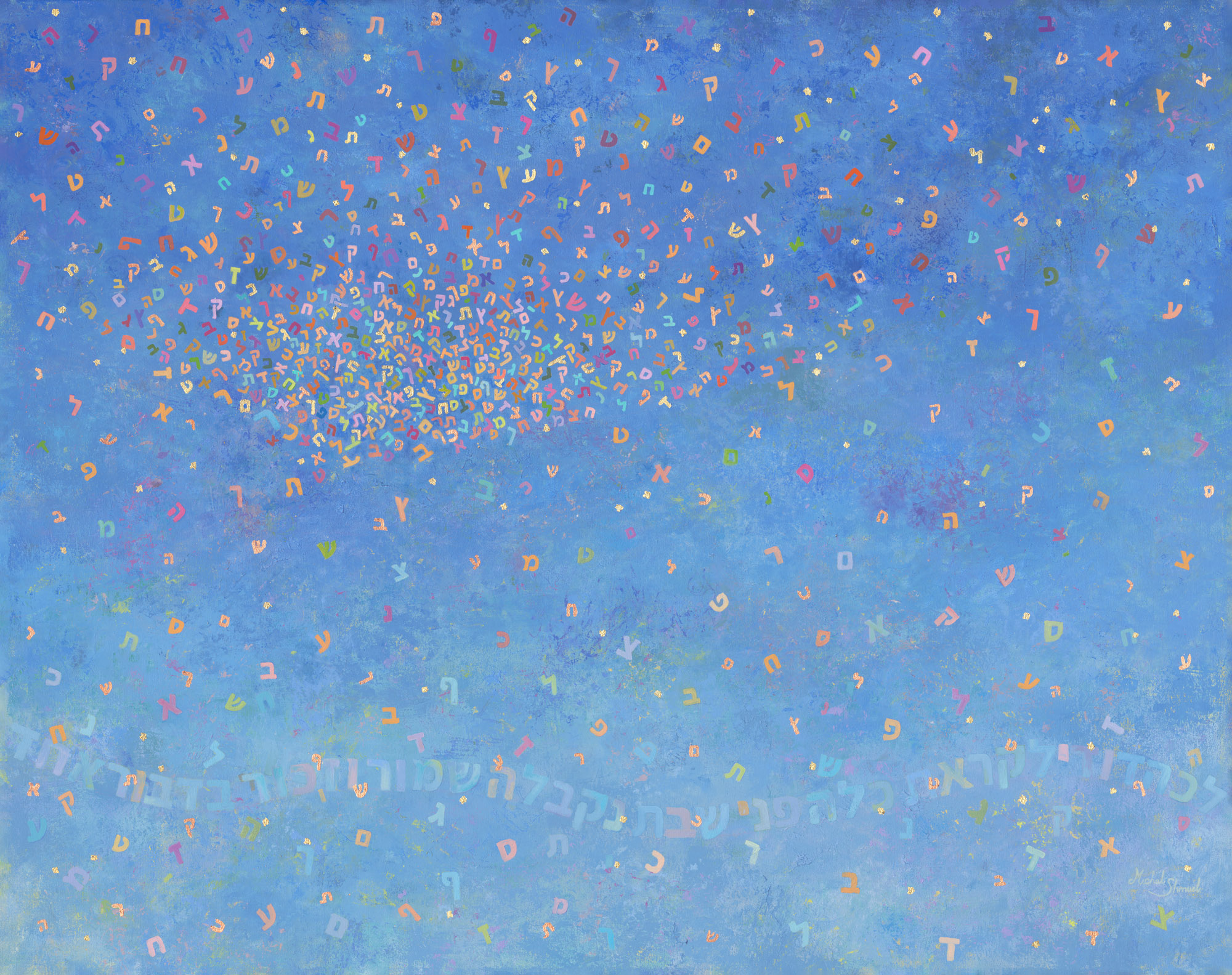
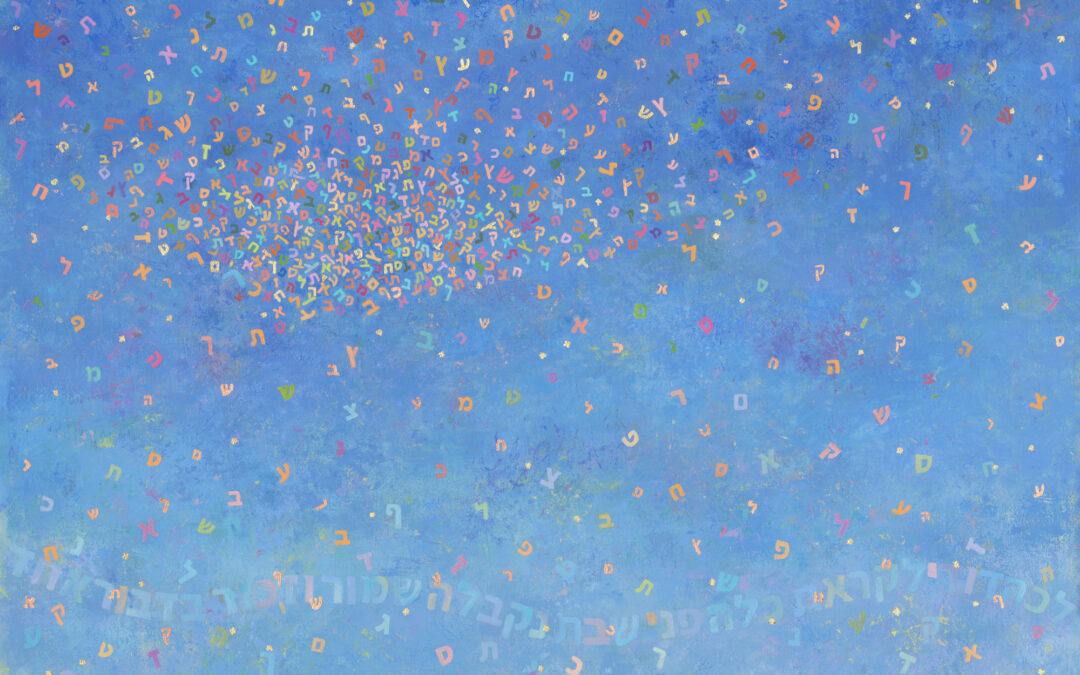
[When Letters Become Stars](https://michalshmuel.com/product/when-letters-become-stars/) sits on the canvas like a whisper that refuses to be silent. Hebrew letters float across the painted surface, but they are not floating randomly. They move as if drawn by something larger than themselves. The background shifts between warm amber and deep blue, like the moment when day becomes evening and you cannot quite tell which direction the light is coming from anymore. Michal has layered the paint so thickly in places that you can see the brushstrokes. You can see where she pressed. Where she held back. The letters themselves seem to glow, as if illuminated from within. This is a painting about language and light. About the way Hebrew letters carry meaning beyond their literal shapes. Each letter is also a number. Each letter is also a door. In this painting, Michal shows us what happens when we understand that the letters of our language, the words of our prayers, are not separate from the spiritual world. They are pathways into it. The Land of Israel contains this kind of language. Walking through Jerusalem, you see Hebrew letters on signs and in doorways. They are everywhere, ordinary and sacred at the same time. Michal captures this duality. In her painting, the letters are both everyday and infinite. Both specific and mysterious.
COLLECTIONS AND THEMES
Sacred Spaces: Jerusalem and Kotel Paintings
Jerusalem appears in Michal's work like a character with depth. Not a monument to look at from a distance. An actual place you can enter. Her paintings of the Land of Israel frequently center on Jerusalem, but specifically on the experience of being in Jerusalem. Of moving through its streets. Of standing in its courtyards. The Kotel, the Western Wall, appears in several paintings. But again, not as a postcard image. Not as a symbol to be admired from afar. Rather, as a place of prayer. A wall you can touch. A stone that has been touched by millions of hands across thousands of years. These paintings contain something that photographs cannot quite capture. They contain the feeling of being there. The sense of standing in a place where heaven and earth seem very close. The knowledge that you are standing where your ancestors stood. Where people you will never meet pray right now, in this moment. Michal's paintings of Jerusalem spaces carry this spiritual weight. They are heavy with presence. The textured surfaces, built up through layers of paint and mixed media, make you want to reach out and touch them. The warm colors make you feel the sun on the stone. The shadows suggest doorways and passages, inviting you deeper into the image. Her work captures what it means to be a Jewish person standing in these particular spaces. The mix of personal prayer and collective memory. The sense of home that exists even if you do not live there. The knowledge that this land was promised, that it was lost, that it was returned. All of that history sits beneath every brushstroke.
Hebrew Letters as Spiritual Art
Hebrew letters appear throughout Michal's paintings of the Land of Israel. Sometimes they are clearly legible. Sometimes they blur into abstraction. Sometimes they are barely visible, hidden within layers of other paint and texture. This is intentional. Michal understands that Hebrew letters are not just written symbols. They are spiritual vessels. In Jewish tradition, letters have numerical values. They have mystical meanings. A letter can be a gateway. A single letter can contain entire worlds of understanding. When Michal paints Hebrew letters into her work, she is not adding text. She is adding presence. She is saying that the language itself, the very words we use in prayer, are part of the Land of Israel. They belong to this place. They shape this place. You cannot separate the spiritual landscape of Israel from the language that names it. The letters anchor the painting. They give it a specific gravity. They say: this is Jewish space. This is prayer made visible. This is the meeting place between words and spirit. Her paintings that feature Hebrew letters often explore the themes of connection and continuity. The letters link past to present. They link the viewer to generations of people who spoke and prayed in this same language. They turn abstraction into something you can almost touch.
Roots and Stones
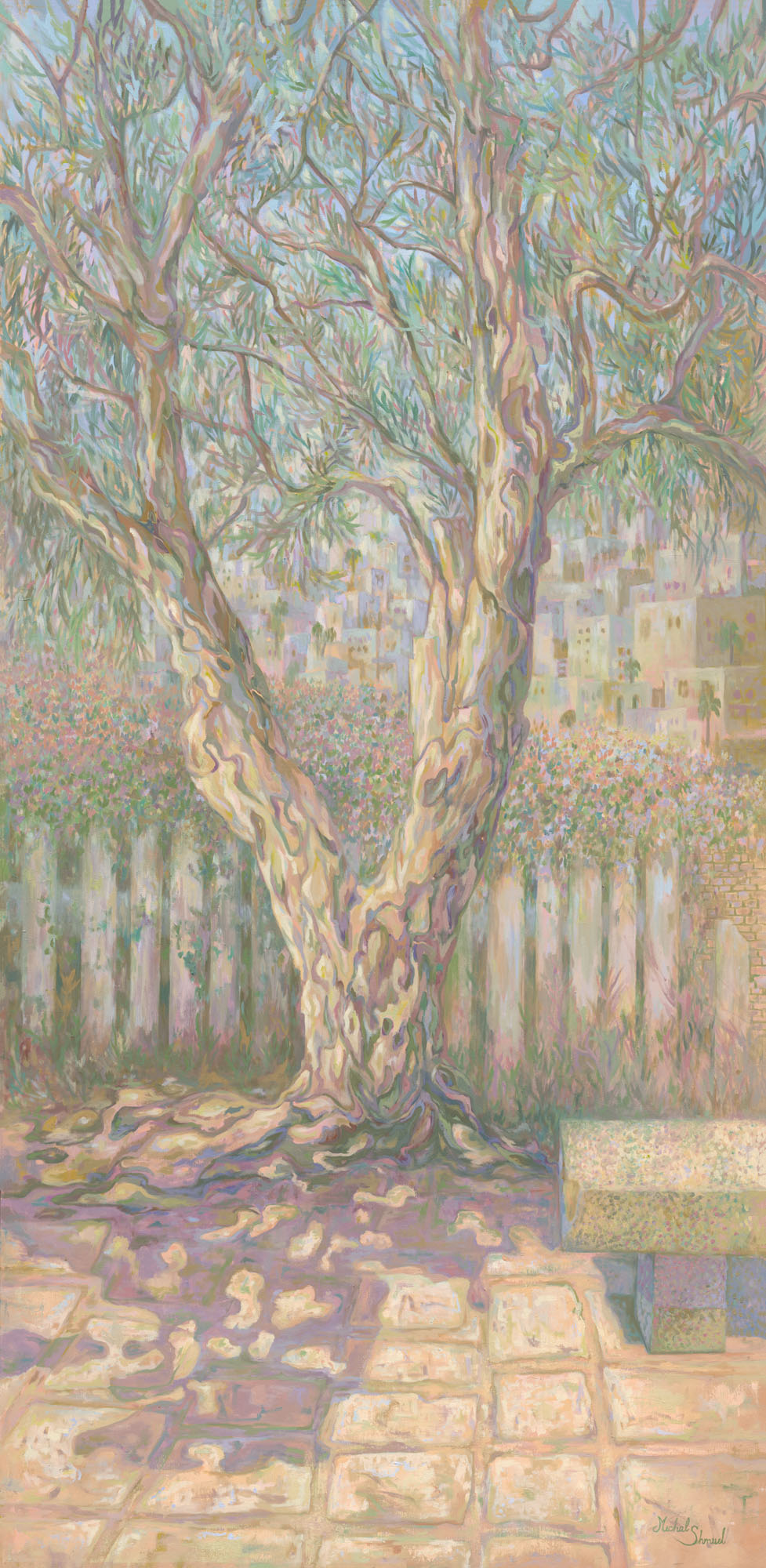
[Roots and Stones](https://michalshmuel.com/product/roots-and-stones/) shows exactly what its title promises. Roots twisted and deep. Stones layered and patient. But the painting is not about literal botanical study. It is about belonging. About the way a people can grow into a place. Can become rooted in it. Can find nourishment in rocky ground. The palette here is earth and stone. Warm browns. Deep grays. Ochre that catches the light like dust. But within this muted color, Michal has hidden moments of brightness. A vein of gold. A flash of warmer tone. The brushwork is thick and deliberate. You can see her hand in every mark. You can see that she considered each stroke. The painting hangs together through texture, through the way the layers interact. This is a painting about foundation. About what it means to put down roots in a place. The Land of Israel is not easy ground. It is rocky and difficult and beautiful. It requires patience. It requires the kind of commitment that grows deep rather than wide. Michal's painting shows this. The roots do not give up. They twist around the stones. They find the soil. They persist. This painting, like all of Michal's work, is a meditation on belonging. It asks: what does it mean to be rooted in a particular place? What does it mean to call somewhere home?
Continuing: Sacred Art and the Spirit of Home
The Emotional Power of Sacred Art
Sacred art does more than decorate a wall. It speaks to something deep inside us. When you look at paintings of the Land of Israel, you are not just seeing landscapes or religious symbols. You are witnessing a conversation between the artist and the divine. You are seeing faith made visible through color, texture, and brushstrokes.
Michal Shmuel understands this. Her paintings of the Land of Israel are not pretty postcards. They are prayers in paint. They are conversations about what it means to belong to a place, to a people, to a spiritual tradition that stretches back thousands of years.
Connecting to Heritage Through Color
Color in sacred art is never accidental. Every hue carries meaning. When Michal reaches for gold, she is thinking about light breaking through the Temple. When she uses deep blues and purples, she is painting the mystery of the night sky over Jerusalem. When she layers greens and earth tones, she is showing the persistence of life in rocky, difficult terrain.
This is why paintings of the Land of Israel feel different from other landscape art. They are not trying to show you what the land looks like. They are trying to show you what the land means. The colors are chosen to help you feel the spiritual weight of the place.
Heritage is not just something you read about in books or hear about in stories. It lives in your body. It lives in the way certain colors make you feel. Sacred art taps into this. It gives your heritage a physical form. It lets you hang it on your wall and live with it every day.
Stories Told in Paint
Every painting tells a story. Not just one story, but many stories layered on top of each other. A painting of the Land of Israel might show the olive groves, but it is also showing the history of the Jewish people. It is showing survival. It is showing roots that grip the earth. It is showing flowers blooming in impossible places.
This is different from illustration. An illustration shows you what happened. A painting lets you experience what it felt like. The textured surfaces in Michal's work, the way the paint is layered and built up, the way light seems to move across the canvas—these things create a feeling. They create a space you can step into.
When you live with paintings of the Land of Israel in your home, you are living with these stories. You are surrounded by them. They become part of your daily life. They remind you of connection. They hold space for meaning.
Jerusalem, Softened by Flowers: The Holy City in Bloom
[Jerusalem, Softened by Flowers](https://michalshmuel.com/product/jerusalem-softened-by-flowers/) brings tenderness to one of the most spiritually intense places on Earth. Jerusalem is known as the eternal city, the city of G-d. In this painting, Michal softens the ancient walls and the weight of thousands of years of history with something delicate: flowers.
The flowers are not secondary elements. They are not just decoration. They are the heart of the painting. They bloom against stone. They push through the hardness of the city. The colors—pinks, purples, soft yellows—create a feeling of hope and beauty emerging from strength.
This is a painting about Jerusalem as a living city, not just a historical one. It is about how faith grows. How beauty persists. How the spiritual life of a place is not just about the past. It is about what is alive right now. The flowers represent the present moment. They represent growth and renewal happening in real time.
The textured brushwork in this piece creates movement. The paint is applied thickly in some places, thinly in others. Your eye moves across the canvas, dancing between the flowers and the ancient architecture. It feels alive. It feels breathing.
—
Collecting and Displaying Judaica Paintings
Collecting art is a personal practice. There is no right or wrong way to do it. But there are things to consider if you want paintings of the Land of Israel to work well in your space and in your life.
Choosing the Right Piece for Your Space
Start with what speaks to you. Not what you think should speak to you, or what would look good next to your sofa. What actually makes you stop and look? What makes you want to spend more time with it?
When you are looking at paintings of the Land of Israel, notice what draws you in. Is it the colors? The subject matter? The feeling it creates? Trust that instinct. Your response is the most important piece of information you have.
Think about the light in your space. Paintings need light to live. If you have a wall that gets natural light, this can be wonderful. The light will change how the painting looks throughout the day. A painting that feels warm and golden in afternoon light might feel quieter and more reflective in the morning. This is one of the gifts of living with paintings. They are never quite the same twice.
Also think about the size of the piece. A large painting makes a statement. It demands attention. A smaller painting can be more intimate. It invites you to come close. Both approaches are valid. Think about what your space needs and what you need from the painting.
When Letters Become Stars: Sacred Script as Art
[When Letters Become Stars](https://michalshmuel.com/product/when-letters-become-stars/) is a painting that bridges the visible and the invisible. Hebrew letters—the letters of creation, the letters that form the name of G-d—are painted in such a way that they seem to transform into stars.
This is a painting about the sacred nature of language. In Jewish tradition, the Hebrew letters are not just tools for communication. They are holy. They carry meaning on multiple levels. The visible meaning and the hidden meaning. The literal and the mystical.
When Michal paints Hebrew letters into starlight, she is showing something that has always been true: that language itself is a kind of light. That the letters we use to speak to each other and to speak to G-d are sacred. They illuminate.
This painting works beautifully for anyone interested in Kabbalistic art, in the deeper layers of Jewish spirituality. But it also works simply as a beautiful composition. The movement from letter to light is visually compelling. The colors create depth. The brushwork pulls you in.
Placement and Lighting Tips for Fine Art
Consider placing a painting at eye level or slightly above, depending on where people will be looking at it. If the painting will be viewed while sitting, eye level should be measured from a seated position.
Avoid hanging paintings in direct sunlight if possible. Over time, this can fade the colors. Instead, look for walls with indirect light. Light that comes from above or from the side works well for paintings.
If you want to emphasize the texture of the paint—and with Michal's work, you absolutely should—make sure you have light that can catch the surface. This is where the brushstrokes and layered paint really come alive.
Consider the wall color too. A neutral wall lets the painting be the focus. But a subtly colored wall can create a conversation with the painting. Warm walls complement paintings with warm tones. Cooler walls make cool-toned paintings sing.
—
Jewish Art as a Gift and Heirloom
Paintings of the Land of Israel are not just for your own home. They are meaningful gifts. They are pieces that can become family heirlooms.
Meaningful Gifts for Jewish Celebrations
A painting by Michal Shmuel makes sense for so many occasions. For a bar or bat mitzvah, a painting about the Land of Israel celebrates the young person's connection to their heritage and their identity. It is a gift that will grow with them.
For a wedding, a painting about faith and roots and blooming in place speaks to the beginning of a new life together. For someone moving to Israel, it is a way of saying: you belong there. For someone staying in the diaspora, it is a way of maintaining connection.
For any major life moment—a new home, a milestone birthday, a time of grief or healing—a painting by Michal can hold space for what you are experiencing. Jewish art does this. It takes your inner life and gives it form.
Building a Family Art Collection
One painting can become two. Two can become three. Over time, you build a collection. A collection creates a story. It shows your spiritual journey. It shows what has mattered to you. It shows how your thinking has evolved.
A family collection of paintings of the Land of Israel is a way of saying: this place matters to us. This heritage matters to us. These values—growth, roots, faith, beauty, connection—matter to us.
When children grow up surrounded by these paintings, they absorb the values without being told. They see that beauty and spirituality are worth investing in. They see that connection to heritage is something the family honors.
—
Painting Collection Overview
Michal Shmuel has created a body of work that explores the spiritual dimensions of the Land of Israel, the nature of Jewish identity, and the relationship between roots and growth. Each painting is a conversation about belonging and meaning.
|
Collection |
Theme |
Medium |
Link |
|
Holy City, Sacred Spaces |
Painting & Mixed Media |
michalshmuel.com |
|
|
Hebrew Script, Kabbalah |
Painting & Mixed Media |
michalshmuel.com |
|
|
Holy Land, Nature |
Painting & Mixed Media |
michalshmuel.com |
|
|
Nature, Renewal |
Painting |
michalshmuel.com |
Her collection includes paintings that focus on specific locations—Jerusalem, the olive groves, the gardens. It includes paintings based on Hebrew letters and Kabbalistic concepts. It includes paintings about flowers, about stones, about the particular light that exists in the land.
What unites all of these paintings is Michal's commitment to creating work that is both visually beautiful and spiritually true. Her paintings do not shy away from difficulty. She shows roots gripping stone. She shows persistence in harsh conditions. But she also shows beauty. She shows flowers blooming. She shows light breaking through.
This is why living with these paintings matters. They do not offer easy comfort. They offer truthful beauty. They ask you to think about what you believe in. They invite you into a conversation about faith and home and what it means to be connected to a particular people and a particular place.
—
Featured Highlight
The Eternal Olive Tree: Roots of Faith
[The Eternal Olive Tree](https://michalshmuel.com/product/the-eternal-olive-tree/) is one of Michal's most powerful paintings about connection to the land. The olive tree has always been central to the spiritual life of the Land of Israel. It is mentioned in the Torah. It provides oil for lamps in the Temple. It represents peace. It represents survival. It endures.
This painting shows the roots of an olive tree. Not a pretty, picturesque version. A real one. The roots are gnarled. They twist around stones. They grip the earth. The painting honors this struggle. It honors what it takes for something to survive and grow in difficult terrain.
The colors are earthy—browns, deep greens, hints of gold. The brushwork is energetic. You can feel the movement of growth. You can feel the ancient persistence of this tree and this root system stretching back through generations.
For anyone interested in paintings of the Land of Israel, this piece speaks to something essential: the idea that roots matter. That what holds you to a place and a people is not always visible. It is not always beautiful in a conventional sense. But it is real. It is powerful. It is what makes you who you are.
This painting invites you to think about your own roots. Where do you come from? What holds you to your people? What do you persist in, even when conditions are difficult?
Paintings of the Land of Israel: Spiritual Connection Through Art
Finding Meaning in Paintings of the Land of Israel
Paintings of the Land of Israel do more than hang on a wall. They speak to something deep inside you, especially if you have any connection to Jewish heritage or spirituality. When Michal Shmuel creates these works, she is not just painting landscapes. She is capturing the feeling of belonging to a place, a people, and a history that stretches back thousands of years.
The Land of Israel holds special meaning for Jewish people around the world. For some, it is a place they have visited. For others, it lives mainly in their hearts and in their heritage. Paintings of the Land of Israel help bridge that gap. They let you feel connected to the land even from far away. They remind you of stories your family may have told you. They connect you to something bigger than yourself.
What makes these paintings different from regular landscape art is the intention behind them. Michal Shmuel is not trying to create a realistic photograph. Instead, she uses layered paint, warm colors, and textured surfaces to capture the soul of the land. Her brushstrokes show movement and life. The colors suggest both the harshness of the desert and the beauty of growth and renewal. When you look at one of her paintings of the Land of Israel, you are not just seeing trees or hills. You are experiencing emotion.
The Spiritual Dimension of Landscape Art
Many people do not realize how spiritual landscape paintings can be. In our busy modern world, we forget to pause and think about the places that matter to us. Paintings of the Land of Israel give you permission to slow down. They invite you to sit with your feelings about home, heritage, and identity.
The colors Michal Shmuel chooses matter deeply. Warm golds, soft greens, and earthen browns remind us of the actual soil and light of the Middle East. But these colors also carry emotional weight. Gold suggests something precious and holy. Greens suggest life and hope even in difficult conditions. Browns ground us to the earth beneath our feet. Together, these colors create paintings that feel both real and sacred at the same time.
The texture in paintings of the Land of Israel also tells a story. When paint is layered thick on canvas, it creates shadows and depth. Light hits the surface differently depending on how the paint sits. This means that different viewers, looking at the same painting from different angles or in different light, will have slightly different experiences. That variability mirrors real life. It mirrors how we each carry our own relationship to the land and to our heritage.
Why These Paintings Matter in Your Home
Hanging a painting of the Land of Israel in your home is not just decoration. It is a daily reminder of what matters to you. Every time you walk past it, you reconnect with your roots. You remember stories. You feel less alone in your faith or cultural identity.
These paintings also serve as conversation starters. When guests visit your home and ask about a beautiful painting with warm colors and textured brushstrokes, you get to share your story. You get to explain why the Land of Israel matters to you. You get to pass on meaning to the next generation, even in small moments.
For people who have visited Israel, these paintings can be a beautiful way to hold onto memories. For people who dream of visiting someday, they offer a spiritual connection while you save for that journey. For people whose families came from there generations ago, they honor that history and keep those ancestors present in your daily life.
Paintings of the Land of Israel by Michal Shmuel combine fine art with deep personal meaning. They are not generic landscapes. They are thoughtful, carefully created works that respect the complexity of your relationship to the land and your heritage. When you live with one of these paintings, you are choosing to surround yourself with beauty that matters.
—
Conclusion
Paintings of the Land of Israel offer something rare in the art world: beauty that connects you to your spirituality and heritage at the same time. Whether you are drawn to the textured brushstrokes, the warm colors, or the deeper meaning these works carry, Michal Shmuel's paintings create a space for reflection and connection in your home.
If you are looking to add meaningful art to your life, or you want to give a gift that honors someone's Jewish heritage, paintings of the Land of Israel are a meaningful choice. They work beautifully in any room, and they spark conversations about faith, family, and what it means to belong.
Visit michalshmuel.com to explore Michal's full collection of paintings of the Land of Israel and other Judaica art. You will find works that speak to your heart and bring warmth and spiritual meaning into your everyday life.
—
Frequently Asked Questions
What kind of art does Michal Shmuel create?
Michal Shmuel creates paintings and mixed media artwork focused on Judaica themes and spiritual subjects. Her work explores Jewish heritage, biblical stories, and the spiritual landscape through the medium of paint on canvas. She uses layered, textured brushstrokes and a warm color palette featuring golds, greens, and earth tones to create depth and emotion in her paintings. Rather than realistic representation, her approach captures the feeling and spiritual essence of her subjects. Each painting is a combination of careful composition and expressive technique that invites viewers to connect with themes of faith, heritage, and belonging. Her paintings hang in homes and collections around the world and are particularly meaningful for people with strong connections to Jewish culture and spirituality.
What collections are available?
Michal Shmuel offers ten distinct collections that explore different aspects of Judaica art and Jewish spirituality. The Flowers collection celebrates nature's beauty through a spiritual lens. The Olive Trees and Trees collection explores the symbolism and presence of trees in Jewish culture and the Land of Israel. The Jerusalem collection captures the spiritual heart of the holy city through painted brushstrokes and layered colors. The Design and Abstract collection offers more contemporary, symbolic approaches to spiritual themes. The Kotel (Western Wall) collection honors one of Judaism's most sacred sites. The Letters collection explores the beauty and meaning of Hebrew letters. The Jewish People collection celebrates the diversity and strength of the Jewish community. The Biblical Stories collection brings ancient narratives to life through paint and texture. The Land of Israel collection creates a spiritual connection to the ancestral homeland. Finally, the Menorahs collection features this important Jewish symbol in various artistic expressions. Each collection is thoughtfully designed to resonate with different aspects of Jewish life and faith.
How can I purchase a Michal Shmuel painting?
You can browse and purchase Michal Shmuel's paintings of the Land of Israel and other Judaica artwork directly through her website at michalshmuel.com. The site showcases her complete collections with high-quality images that help you see the texture and detail of each painted piece. You can explore different collections, read about the meaning behind each work, and view pricing information. The website makes it easy to find the perfect painting for your home or as a gift. Each painting is described so you understand the artist's intention and the themes she explores. You can contact Michal directly through the website if you have questions about a specific painting or need help choosing a piece that fits your space and your heart. Purchasing through michalshmuel.com supports the artist directly and ensures you receive authentic, original work.
What makes Judaica art a meaningful gift?
Judaica art like the paintings of the Land of Israel makes an exceptionally meaningful gift because it honors someone's faith, heritage, and identity all at once. Unlike generic art, Judaica paintings carry spiritual weight and personal significance. When you give someone a painting of the Land of Israel or another work from Michal Shmuel's collections, you are saying that you value their connection to Jewish culture and spirituality. These paintings work as gifts for many occasions: to celebrate a bar or bat mitzvah, to mark a Jewish holiday, to welcome someone into a new home, or simply to show support for their identity and beliefs. The paintings are beautiful enough to enhance any room's decor, yet meaningful enough to bring tears to someone's eyes. They become family heirlooms, pieces that get passed down and carry stories across generations. For people who have visited Israel or dream of visiting, paintings of the Land of Israel create a tangible connection to that sacred place. For anyone with Jewish roots, these paintings say "I see you, I honor your heritage, and I support your faith." That makes them gifts that matter far more than their price tag.