
The stone steps of the Old City are worn smooth by centuries of feet, and in the late afternoon, the light catches the ochre and pale gold of the buildings, casting long shadows across alleyways where the same prayers have echoed for generations. This is where Michal Shmuel begins. Not with a sketch or an outline, but with the feeling of a place so layered with history that the air itself seems to hold memory. Her Jerusalem art paintings are not attempts to capture a photograph of the city. They are conversations between the artist and the spiritual weight of the land, translated onto canvas through layered paint, warm earth tones, and textures that invite your hand to reach out and feel the brushstrokes. Each painting feels lived in, inhabited by the prayers and hopes of generations of Jewish people who have stood exactly where those painted stones sit. When you look at a Michal Shmuel Jerusalem painting, you are not standing in front of a picture. You are standing in front of testimony. The mixed media surfaces hold gold leaf, rich ochres, soft Mediterranean blues, and the kind of greens that only grow on Judean hillsides. Her paintings refuse to be simple or decorative. They ask something of you. They ask you to remember that Jerusalem is not just a city. It is a living center of Jewish faith, a place where stone and prayer have become indistinguishable.
Michal's work emerged from a specific spiritual landscape. Born in Bnei Brak in 1972 to parents from Morocco, she grew up surrounded by both Ashkenazi religious depth and Sephardic artistic warmth. That combination lives in every brushstroke of her Jerusalem paintings. She studied at Beit Yaakov Seminary in Tel Aviv, a path that grounded her in Jewish learning and reflection. But it was the land itself, the actual soil and stone of Israel, that taught her how to paint. Her work is not theoretical. It is rooted in the physical experience of walking through Jerusalem, of standing before the Kotel as the light changes, of seeing pomegranate trees grow on rocky hillsides, of understanding that this particular place has been promised and prayed for by Jewish people for thousands of years. This is what separates her Jerusalem art paintings from tourist renderings or nostalgic sketches. Michal paints from inside the tradition. She paints as someone who has inherited both the artistic legacy of her Moroccan family and the spiritual inheritance of her Jewish faith.
The Jerusalem paintings exist in a category of their own. They are not landscapes in the traditional sense. A landscape asks you to see a view. A Michal Shmuel Jerusalem painting asks you to feel a connection. The textured surfaces, built up with layers of paint and mixed media elements, create depth that flat images cannot achieve. The warm colors do not sit passively on the canvas. They build and deepen and sometimes surprise you with threads of blue or gold emerging from underneath. Her paintings of Jerusalem have been created over decades of artistic practice, each one a meditation on what it means to belong to a place, to carry its history, to participate in its ongoing story of faith and resilience. When collectors and viewers encounter these works, they often describe a sense of recognition, not of the city necessarily, but of something internal. The paintings seem to recognize you back.
KEY TAKEAWAYS
- Michal Shmuel creates Jerusalem art paintings that blend personal spiritual practice with the lived history of Jewish Jerusalem
- Her mixed media paintings use layered brushstrokes, warm earth tones, and textured surfaces to create depth beyond what traditional landscape painting can achieve
- Growing up in Bnei Brak to Moroccan parents, Michal inherited both Sephardic artistic warmth and Ashkenazi religious depth, both visible in her work
- Her Jerusalem paintings are not decorative or nostalgic, but rather testimony pieces that ask viewers to engage with the spiritual weight of the land
- The paintings draw from direct experience of Israel's landscape: the ochre of Old City stone, the light on Judean hills, the botanical reality of olive trees and pomegranates
THE ARTIST BEHIND THE CANVAS
From Bnei Brak to the Canvas
Bnei Brak in the early 1970s was a city of rapid growth and deep religious commitment. Michal's parents brought with them the artistic traditions of Morocco, a country where Judaism had developed in harmony with North African color, pattern, and visual warmth. In many Ashkenazi Jewish households, visual art carried a certain suspicion, viewed as potentially idolatrous. But in Sephardic households from Morocco and other Mediterranean regions, beauty and craft were not separate from spirituality. They were expressions of it. Michal grew up in the intersection of these two inheritances. The intellectual depth and textual devotion of the Ashkenazi world met the color and sensory richness of Sephardic practice. She was educated at Beit Yaakov Seminary in Tel Aviv, where she received training not just in Jewish learning but in how to think about her own identity as a woman engaged with tradition. This education shaped not just her mind but also her artistic sensibility. When she eventually turned to painting, she was not discovering something new. She was bringing together threads that had always been present in her life.
The decision to become an artist was not made in isolation. It emerged from years of living in Israel, of moving through Jerusalem and the surrounding landscape, of participating in the rhythms of Jewish prayer and celebration tied to the agricultural reality of the land. Michal began painting seriously with a clear sense of subject: the places and spaces that held spiritual meaning for Jewish people. Not the famous postcard versions of these places, but the lived experience of them. The weight of stone. The quality of light at different times of day. The way a prayer feels different when you are standing in the space where generations before you have stood. Her Jerusalem art paintings became her primary means of articulating this vision.
Sephardic Heritage and Spiritual Vision
The Moroccan heritage in Michal's work is not decorative nostalgia. It is foundational. Moroccan Jewish culture developed over centuries in a place where Islamic, Jewish, and North African artistic traditions had woven together. Colors were not muted or controlled. They sang. Patterns held meaning. Ritual objects were beautiful not despite their spiritual function but because of it. A Sephardic family from Morocco would have valued the work of artisans, would have understood making things with care as a form of prayer. When Michal Shmuel paints, she inherits this understanding. Her palette is characteristically warm: ochres that recall the earth of the Mediterranean, golds that suggest both the light of Jerusalem and the metalwork traditions of Moroccan Judaism, deep blues reminiscent of tiles from ancient synagogues, and greens that grow in the rocky soil of the Judean hills. These are not arbitrary choices. They are the colors of her inheritance.
At the same time, her work carries the spiritual seriousness of Ashkenazi Jewish tradition. There is contemplation here, depth, layers of meaning. Her paintings often incorporate Hebrew letters, biblical imagery, references to Jewish prayer and practice. These elements emerge from a tradition that views text and learning as sacred. The combination is distinctive. You see it nowhere else quite the same way.
The Holiness Above
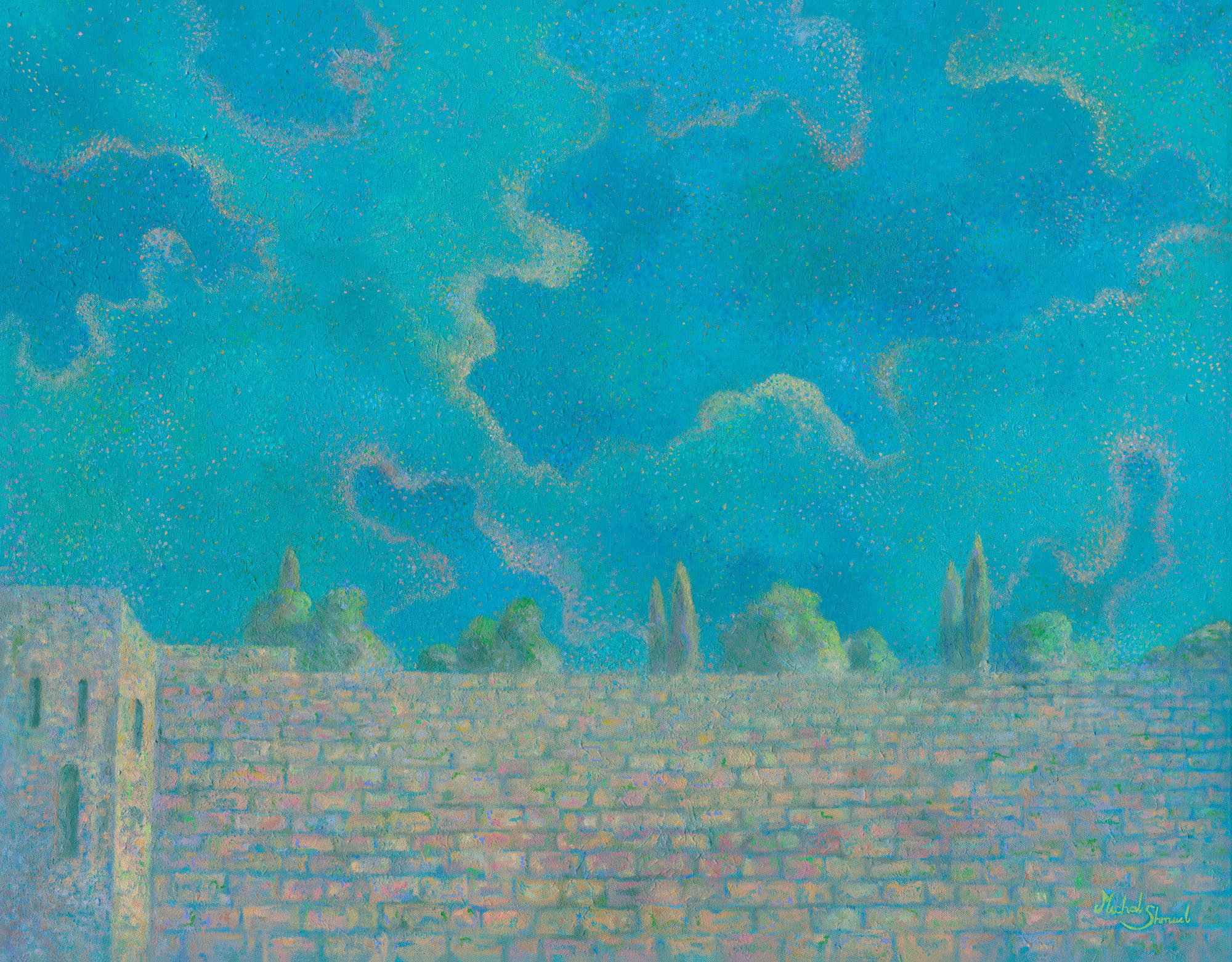
[Holiness Above](https://michalshmuel.com/product/the-holiness-above/) emerges from Michal's practice of painting spiritual spaces and moments of connection. The canvas holds layers of warm tones and gold leaf, creating a sense of light that feels internal rather than external, as if the painting is illuminated from within by something devotional. The mixed media approach allows for textured surfaces that suggest depth and complexity. This is a painting about transcendence, but it does not rely on abstractions to convey that sense. Instead, it builds it through color and texture, through the careful accumulation of paint and materials that create a surface you want to touch. The painting draws from the experience of standing in a sacred space and feeling something shift. It is grounded in the specific spiritual landscape of Jewish prayer and worship, yet it speaks to the universal human recognition of holiness. For those who know Jerusalem and its sacred spaces, the painting carries resonance. For those who approach it without that knowledge, it still offers something: an invitation into a moment of spiritual presence.
COLLECTIONS AND THEMES
Sacred Spaces: Jerusalem and the Kotel Paintings
Jerusalem occupies a particular place in Jewish consciousness and in Michal's artistic practice. The city is not just a place on a map. It is the center of Jewish prayer and longing across millennia. For two thousand years after the destruction of the Second Temple, Jews in the diaspora prayed facing toward Jerusalem. The phrase "Next year in Jerusalem" became the refrain of Passover seders across the globe. When the State of Israel was established in 1948 and the Old City of Jerusalem came under Israeli sovereignty in 1967, the return to the Western Wall, the Kotel, had dimensions of spiritual restoration that cannot be separated from political history or personal faith. Michal Shmuel grew up in this post-1967 reality. Jerusalem was not a distant dream for her. It was accessible, present, lived. Her Jerusalem paintings carry this specificity.
The Kotel holds particular importance in her work. The Wall is the last standing structure from the Second Temple complex, and it has become the central site of Jewish prayer in Jerusalem. When you stand before it, you stand with generations. People come and place written prayers in its crevices. They come in moments of grief, celebration, seeking, thanksgiving. The stones themselves are ancient, worn, and powerful in a way that has nothing to do with sentimentality. Michal's paintings of sacred spaces attempt to capture not the surface appearance but the spiritual density of these places.
Hebrew Letters as Spiritual Art
In Jewish tradition, letters carry more than sound. They carry meaning at multiple levels. Hebrew letters are said to be vessels of divine wisdom. They are the material through which G-d communicated. This is not merely theological abstraction. It is the foundation of Jewish mysticism and learning. Michal Shmuel incorporates Hebrew letters directly into many of her paintings, particularly in her collections focused on letters and on Jerusalem. Letters appear not as text to be read in a conventional sense but as visual and spiritual elements. A letter might emerge from color fields, might be partially obscured by layers of paint, might carry gold leaf that makes it gleam. The effect is to suggest that letters are not merely communication. They are sacred objects, connections to something deeper.
This approach comes naturally from her background in Jewish learning and from her Sephardic heritage. In Moroccan Jewish synagogues and homes, illuminated texts and beautiful ritual objects that bore Hebrew letters were central to spiritual practice. Michal translates this tradition into modern painting, using mixed media techniques to create surfaces where letters function both as language and as image. The result is often paintings that reward sustained looking. You might read them as offering specific words or verses, or you might simply sit with their visual power.
Roots and Stones
[Roots and Stones](https://michalshmuel.com/product/roots-stones/) speaks directly to Michal's engagement with the land of Israel as a subject that is both spiritual and physical. The painting builds its power through the careful layering of color and texture, with warm earth tones predominating, suggesting both the soil of the Judean landscape and the ancient stone of Jerusalem. Mixed media elements create surfaces that feel substantial, real, grounded. The title itself carries double meaning. Roots suggest both the botanical reality of trees and plants growing in difficult terrain and the metaphorical roots of the Jewish people in this land, roots that go very deep and are difficult to extract. Stones are literal and symbolic. They are what Jerusalem is built from. They are what you gather when you plant a vineyard. In Hebrew prayer, stones become metaphors for permanence and protection. This painting brings all these layers together without announcing them. Instead, it offers them through color and surface, inviting viewers to recognize what feels true about this intersection of land, history, faith, and time.
Part 2: Living with Sacred Art
The Emotional Power of Sacred Art
Sacred art has a quiet way of changing how you feel when you walk into a room. It's not about being impressive or decorative. Instead, these pieces speak to something deeper—the parts of yourself that connect to faith, family history, and belonging. Judaica paintings, especially ones centered on Jerusalem, carry the weight of centuries while still feeling personal and immediate. They remind you of stories your grandparents might have told, places you've visited or dreamed of visiting, and values that matter across generations.
The beauty of sacred art is that it doesn't demand explanation. You stand in front of a Jerusalem art painting by Michal Shmuel and something shifts. Your breathing might slow. You might notice details you missed at first—a brushstroke that catches light, layers of color that seem to glow from within, textures that invite your hand to reach out and touch the canvas.
Connecting to Heritage Through Color
Color is the language these paintings speak most clearly. Blues and golds aren't random choices. They carry meaning rooted in Jewish tradition and history. When Michal works with warm earth tones and sudden bursts of brightness, she's not just making something pretty. She's translating generations of longing, prayer, and connection into something visible.
Think about how a specific color can bring you back to a moment. The golden light of afternoon in Jerusalem. The blue of a prayer shawl worn by someone you loved. The green of olive leaves in spring. Sacred Judaica paintings use these colors intentionally, so that looking at them becomes a kind of remembering—even if you're remembering something you never personally experienced.
Heritage gets passed down through stories, but also through visual memory. A painting on your wall becomes part of your daily spiritual landscape. Your children grow up seeing these images. They absorb the colors, the symbols, the sense that Jerusalem and Jewish history matter. That connection happens wordlessly, just through living with the art.
Stories Told in Paint
Every painting tells a story, but sacred art tells stories that already live inside you. They're stories about resilience, faith, return, and home. The difference between reading about Jerusalem and seeing it rendered in paint by an artist who understands its spiritual weight is the difference between knowing facts and actually feeling something.
Stories in sacred paintings aren't always linear or obvious. You might see Jerusalem rendered not as a literal map but as layers of memory and emotion. Flowers might bloom in unexpected places, suggesting renewal and hope. Letters from Hebrew scripture might shimmer like stars, connecting earth to heaven. Stones might stack and shift, showing how the past is always present, always part of what stands now.
These visual stories work because they match how our memories actually work. We don't remember things in perfect sequence. We remember fragments, feelings, colors, moments. Sacred paintings operate the same way, and that's exactly why they feel true.
Jerusalem, Softened by Flowers: The Holy City in Bloom
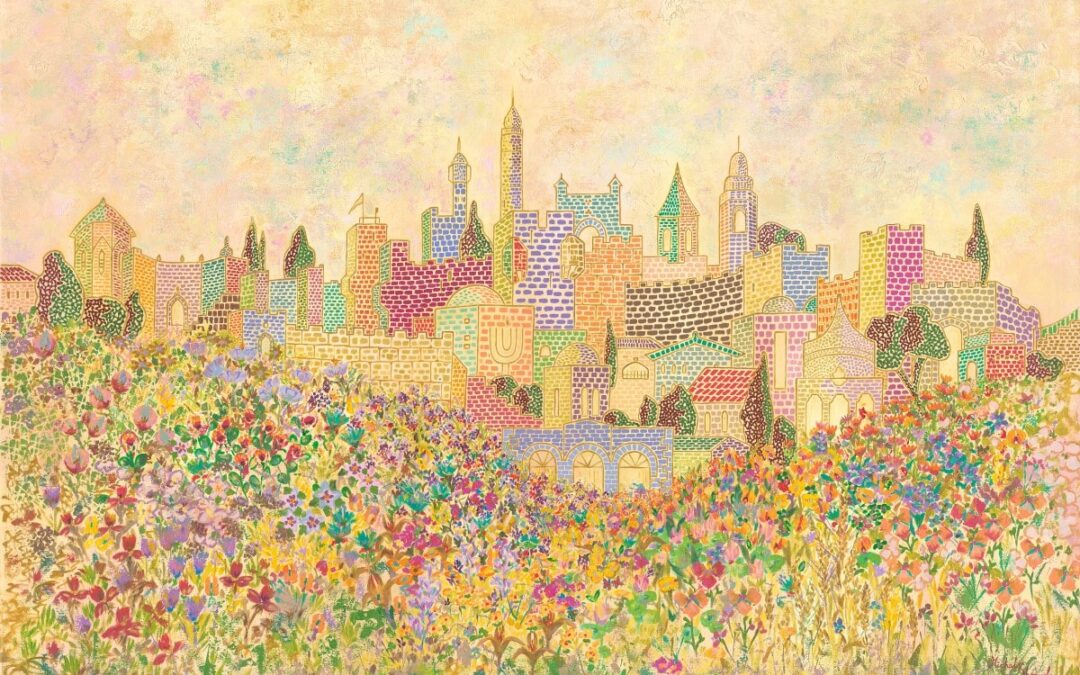
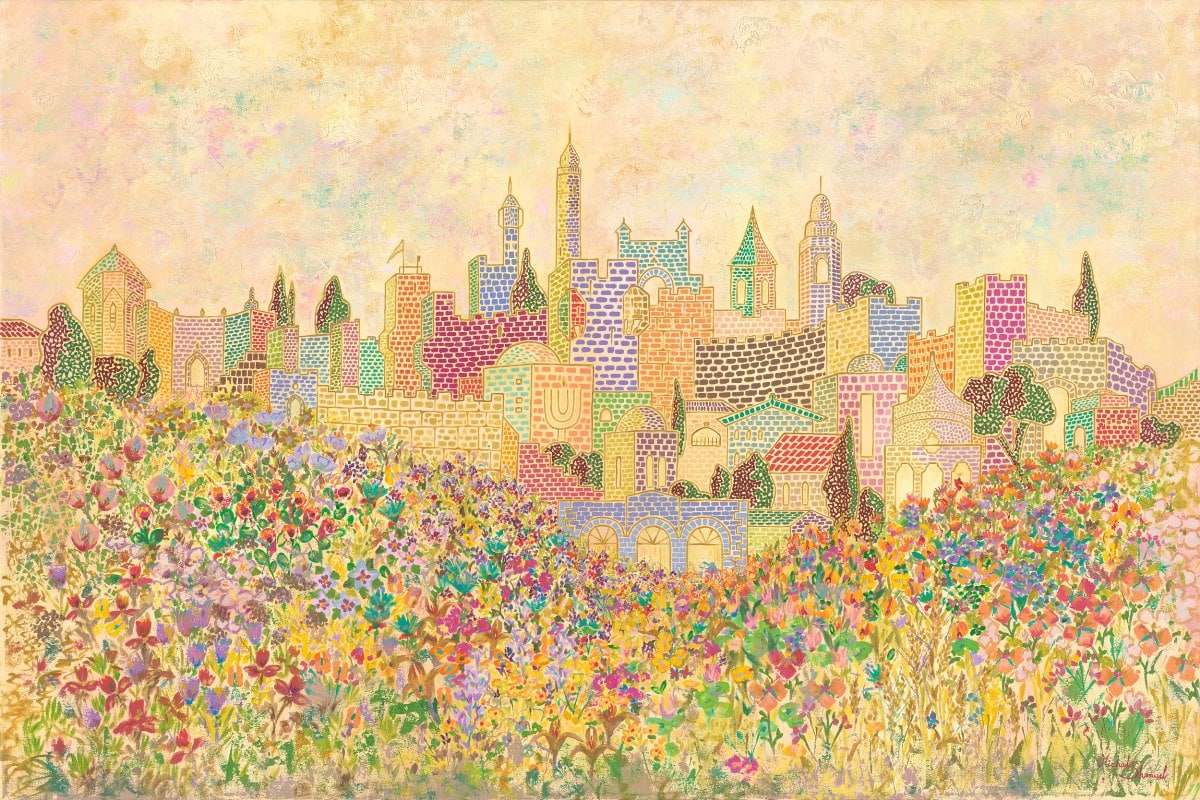
[Jerusalem, Softened by Flowers](https://michalshmuel.com/product/jerusalem-softened-by-flowers/) is one of those paintings that stops you. Jerusalem itself is ancient, eternal, sometimes harsh in its beauty. But Michal has painted it blooming. Flowers burst across the canvas—poppies, anemones, the kind of growth that feels impossible in stone and heat. Yet here they are, softening the city's edges without erasing its strength.
This painting works because it captures something true about Jerusalem that gets missed in photographs. The city is solid and unchanging, yes. But it's also alive. People have always come there carrying seeds of hope. They've prayed, built, returned, rebuilt. The flowers in this painting represent that endless renewal alongside the permanence of stone and history.
The colors are luminous—reds and pinks and whites of flowers against the warmer golds and earth tones of the city itself. It's the kind of painting you keep finding new things in. The more you look, the more you see how carefully Michal has layered the paint, how she's used color to suggest both the overwhelming spiritual weight of Jerusalem and its capacity to nurture life and beauty.
—
Collecting and Displaying Judaica Paintings
Collecting sacred art isn't something you do once and forget about. It's an ongoing conversation with your own faith, your heritage, and what matters to you. Each painting you choose tells something about where you are in your life.
Choosing the Right Piece for Your Space
Start by thinking about what calls to you, not what you think you should like. Do you find yourself drawn to paintings about Jerusalem specifically? Or do pieces featuring Hebrew letters and spiritual symbolism resonate more? Maybe paintings centered on natural elements—olive trees, flowers, stones—feel right for your home.
Consider the actual space where a painting will live. A bedroom might call for something quieter and more contemplative. A living room where family gathers could hold a bolder, more vibrant piece. A study or library pairs well with paintings where words and letters play a role.
Size matters too. A small, intimate painting in an entryway creates a different feeling than a larger piece that anchors a wall. Think about sight lines and how you'll encounter the work—whether you'll see it every morning, whether guests will notice it, whether it's a personal devotional piece or something more communal.
Colors in your existing space matter, but don't stress too much about matching. Sacred Judaica paintings often work across different color schemes because they're rooted in deeper visual traditions. A painting with warm golds and blues fits with contemporary interiors, mid-century furniture, and traditional Jewish home design.
When Letters Become Stars: Sacred Script as Art
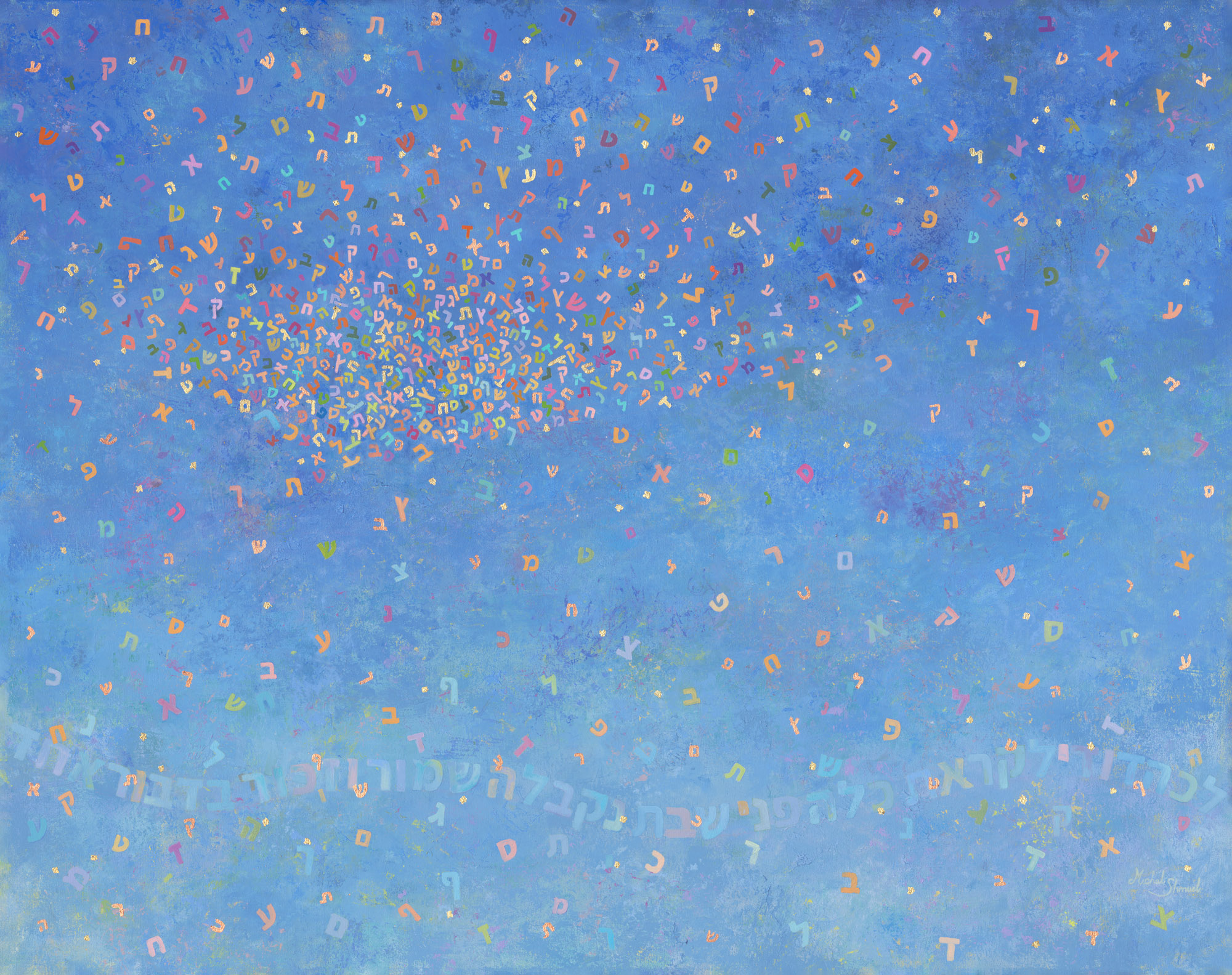
[When Letters Become Stars](https://michalshmuel.com/product/when-letters-become-stars/) transforms Hebrew letters into something luminous and transcendent. This is where Michal's work as a painter really shines—she takes the written word and makes it visual in ways that go beyond calligraphy or design.
Hebrew letters carry meaning at multiple levels. Each letter has numerical value, mystical significance, and historical weight. In this painting, those letters literally become stars, suggesting that written Torah and the heavens reflect each other. The transformation happens through careful brushwork and layered paint that creates depth and light.
If you study Kabbalah or feel drawn to the spiritual dimensions of Torah, this painting speaks directly to that. But even if you're not formally trained in these traditions, the visual effect is moving. You see letters you might recognize from prayer books or mezuzot, and they're reimagined as something more expansive. The painting suggests that holy words connect us to something infinite.
This is the kind of piece that works beautifully in a study, a meditation space, or anywhere you engage with Jewish texts and learning. It's also a thoughtful gift for someone beginning a spiritual practice or deepening an existing one.
Placement and Lighting Tips for Fine Art
Where you place a painting affects how much it matters in your daily life. A piece hung at eye level in a space where you naturally pause—passing it every morning, seeing it while you sit and drink coffee—becomes part of your spiritual practice without effort.
Lighting dramatically changes how sacred paintings feel. Natural light from windows creates a living quality, with colors shifting throughout the day. Early morning light brings out different tones than afternoon or evening light. If possible, position paintings where they'll catch natural light.
For artificial lighting, avoid bright overhead lights that flatten the work. Instead, use accent lighting—a small picture light mounted above the frame, or a lamp positioned to the side. This approach respects the layered paint and textured surfaces that Michal builds into each piece. You'll see the brushstrokes and color variations that make the painting alive.
Avoid direct sunlight if possible, especially if it hits the painting most of the day. Even quality paint can shift over time with constant intense exposure. A spot with bright indirect light or dappled shade keeps the colors vibrant for years.
Consider the wall color too. A neutral or light background lets the painting breathe. Very busy wallpaper or bold paint colors can fight with the artwork rather than support it.
—
Jewish Art as a Gift and Heirloom
Giving a Judaica painting is different from giving other art. It's not just decoration. It's a statement about what you value and what you want the recipient to remember.
Meaningful Gifts for Jewish Celebrations
Judaica paintings make sense for major Jewish milestones. A bar or bat mitzvah gift might be [The Holiness Above](https://michalshmuel.com/product/the-holiness-above/) or [Jerusalem Stands Between Heaven and Earth](https://michalshmuel.com/product/jerusalem-stands-between-heaven-and-earth/)—paintings that celebrate connection to something transcendent at the exact moment a young person is taking on adult spiritual responsibility.
For weddings, paintings about flourishing and growth work beautifully. [A Blooming Jerusalem](https://michalshmuel.com/product/a-blooming-jerusalem/) or [Flourishing Faith: Flowers of Jerusalem](https://michalshmuel.com/product/flourishing-faith-flowers-of-jerusalem/) speak to new beginnings and life built on ancient foundations.
Someone moving to a new home might treasure [Roots and Stones](https://michalshmuel.com/product/roots-and-stones/) or [Layers of Light: Jerusalem](https://michalshmuel.com/product/layers-of-light-jerusalem/), paintings that ground home in something deeper than location.
For someone grieving or going through difficulty, a painting like [The Eternal Olive Tree](https://michalshmuel.com/product/the-eternal-olive-tree/) offers quiet strength—a visual reminder that roots hold even through seasons of loss.
The beauty of giving sacred art is that it keeps giving. Every time the recipient sees the painting, they remember the occasion it marked and the person who understood them well enough to choose something meaningful.
Building a Family Art Collection
Collecting doesn't mean buying everything at once. It means being intentional over time. Maybe you start with one painting that speaks to you immediately. Then years later, another feels right. Before you realize it, you have a collection that tells the story of your family's spiritual journey.
Siblings and cousins might inherit different pieces, each one carrying memories of where that person was in their faith when they received it. Children grow up with certain paintings always present, and those images become woven into their sense of home and heritage.
—
Painting Collection Overview
Michal Shmuel's painting collection explores the intersection of faith, heritage, and the visible world. Each piece combines traditional Jewish symbolism—Hebrew letters, Jerusalem's sacred geography, olive trees, pomegranates, biblical sites—with contemporary techniques in mixed media and layered paint.
|
Collection |
Theme |
Medium |
Link |
|
Holy City, Sacred Spaces |
Painting & Mixed Media |
michalshmuel.com |
|
|
Hebrew Script, Kabbalah |
Painting & Mixed Media |
michalshmuel.com |
|
|
Holy Land, Nature |
Painting & Mixed Media |
michalshmuel.com |
|
|
Nature, Renewal |
Painting |
michalshmuel.com |
Her approach respects the weight of these symbols without making them feel heavy or distant. Instead, the paintings are intimate. They invite you close. You notice details—texture in the paint, unexpected color combinations, places where materials catch light—that reveal themselves slowly.
The collection includes paintings centered specifically on Jerusalem, paintings about sacred text and letters, works exploring natural elements with spiritual significance, and pieces about the land of Israel itself. Some are more abstract, translating spiritual concepts into color and form. Others are more representational, showing recognizable places and objects transformed through paint.
What connects all the work is authenticity. Michal paints what matters. She's not making art about faith the way a designer might—aesthetically, from the outside. She's painting from inside the tradition, which means the symbols, colors, and subjects carry real meaning. That authenticity is what makes the work resonate. You can feel that the artist is not performing a spiritual experience but rather translating one.
—
Featured Highlight
The Eternal Olive Tree: Roots of Faith
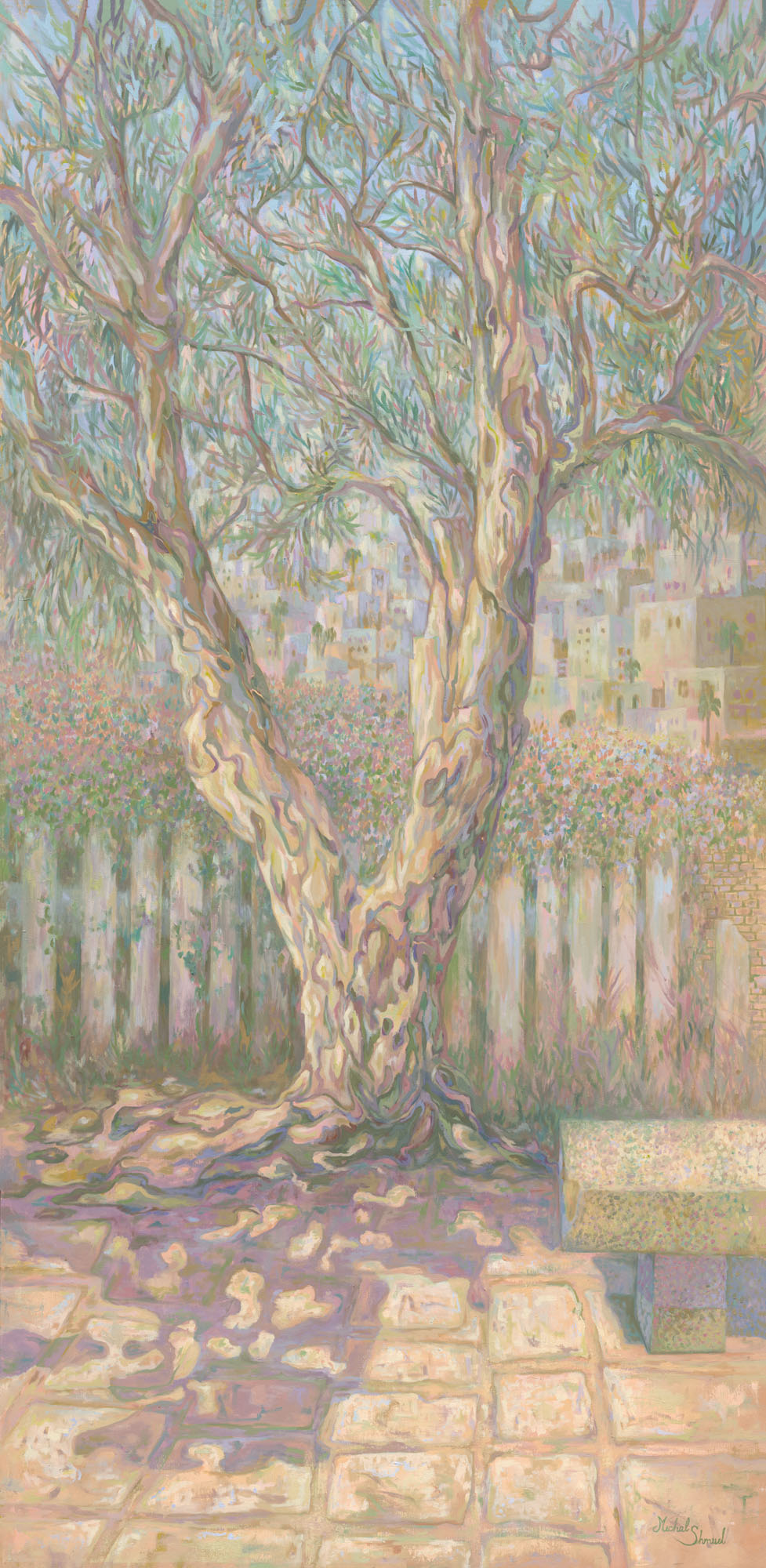
[The Eternal Olive Tree](https://michalshmuel.com/product/the-eternal-olive-tree/) is a painting about permanence and growth. Olive trees appear throughout Jewish history and symbolism. They survived the exile, stood through empires rising and falling, and connected generations of people to the land. In the Bible, an olive branch brought news of hope. In Jewish tradition, olive oil lights the menorah.
This painting shows an olive tree not as a simple illustration but as a layered meditation on roots, time, and resilience. Michal has rendered the tree with paint that suggests both strength and delicacy. You see the ancient gnarled trunk and branches, but also the bright fresh growth, the light moving through leaves. The roots are visible and strong, connecting to earth that holds generations.
The colors are warm—golds, deep greens, browns—with moments of brightness that suggest light and life continuing. This isn't a painting about suffering or difficulty, though olive trees certainly endured both. Instead, it's about what survives because it's rooted in something true. The roots don't fail even when branches bend.
If you're looking for a painting that expresses quiet faith and connection to something lasting, this is it. It works in any space because its message is universal while its symbols are specifically Jewish. You could sit with this painting every day and find something new in it.
Jerusalem Art Paintings by Michal Shmuel: Beauty, Spirit, and Sacred Connection
The Power of Mixing Mediums in Jerusalem Art Paintings
Michal Shmuel doesn't just paint on canvas. She layers different materials to create texture and depth that photographs can't capture. Her Jerusalem art paintings often include elements like gold leaf, acrylic paint, ink, and mixed media pieces that catch light differently depending on the time of day. When you stand in front of one of her pieces, the brushstrokes seem to move. The colors glow. It's not just about what you see, it's about how it makes you feel.
This approach to mixed media turns a painting into an experience. A painting of the Kotel wall isn't just pigment on canvas. It becomes a moment frozen in time, a spiritual experience you can touch with your eyes. The textured surfaces create shadows and highlights that invite viewers closer, encouraging them to really look, really think about what the painting means to them personally.
Why People Choose These Jerusalem Art Paintings for Their Homes
Homes need soul. A living room with nice furniture but no personality feels empty. A bedroom with everything matching but nothing meaningful leaves you feeling like you're in a hotel room. Jerusalem art paintings by Michal change this. They give your space a story.
People choose her work because it speaks to their own faith journey, their family history, or their connection to Israel and Jewish culture. A painting of olive trees becomes a reminder of roots and resilience. A Jerusalem landscape becomes a window into the heart of the city, even if you're looking at it from thousands of miles away. These pieces become conversation starters. Guests notice them. They ask about them. They want to know more.
For many people, having Jerusalem art paintings on their walls is about staying connected. If your ancestors lived in Israel, these paintings honor that history. If you've visited Jerusalem, they bring back memories of walking those streets, feeling that ancient energy. If you've never been but dream of going someday, they bridge that gap between reality and longing.
Caring for Your Mixed Media Artwork
Mixed media paintings need a little more attention than regular paintings. Because they include different materials, they respond differently to light, humidity, and temperature. Keep your Jerusalem art paintings away from direct sunlight if possible. Not because Michal's work fades easily, but because all art benefits from indirect light. It preserves the colors longer and keeps the materials stable.
Humidity matters too. Avoid hanging paintings directly above radiators or in bathrooms where moisture builds up. A stable environment keeps the paint, ink, and any gold leaf or other materials from shifting or cracking. If you ever need to clean the glass frame protecting your painting, use only a soft, dry cloth. Never use liquids near mixed media artwork.
These paintings aren't delicate in the way fine porcelain is, but they deserve respect. They're made to last, to become part of your home for years. With basic care, a painting from Michal's Jerusalem art collection will age beautifully, its colors deepening slightly over time, its message remaining constant.
The Meditation of Looking at Judaica Art
There's something about sitting with a painting, cup of tea in hand, and just letting yourself look. Not analyzing. Not thinking about whether you understand what the artist meant. Just looking. Breathing. Feeling. This is meditation for many people, and Judaica paintings by Michal are perfect for this practice.
The brushstrokes become a rhythm. The colors create a mood. A painting about Jewish heritage isn't telling you to feel a certain way. Instead, it's offering a space where your own feelings can surface. Maybe you'll think about your grandmother. Maybe you'll remember a holiday meal. Maybe you'll feel a sense of belonging to something bigger than yourself.
Michal's Jerusalem art paintings work this way because they're made with intention. She's not painting to be trendy or to match someone's sofa. She's painting because these subjects matter. Because Jerusalem matters. Because Jewish heritage matters. That authenticity comes through in the finished work. You can see it in the careful layering of paint, feel it in the brushstrokes, sense it in the choice of colors.
—
Conclusion
Jerusalem art paintings by Michal Shmuel offer something that regular wall art doesn't. They're beautiful, yes, but they're also meaningful. They connect you to Jewish heritage, to spiritual themes, to the sacred landscape of Israel through mixed media artwork that invites you to look deeper. Whether you're drawn to her olive tree paintings, her abstract pieces inspired by Jerusalem's ancient streets, or her mixed media collections that blend Judaica themes with contemporary art, you're choosing work that matters.
A Michal Shmuel painting isn't just something you hang because it matches your decor. It's a conversation piece, a spiritual anchor, a daily reminder of what you value. It brings warmth to any space, whether through vibrant colors, textured surfaces, or the peaceful power of her brushstrokes.
Ready to add meaningful Jerusalem art to your home? Visit michalshmuel.com to explore her full collection of paintings and mixed media artwork. You'll find pieces that speak to your heart and fit your space perfectly. Whether you're shopping for yourself or looking for a gift that carries real meaning, you'll discover paintings that celebrate Jewish culture, spirituality, and beauty in all its forms.
—
Frequently Asked Questions
What kind of art does Michal Shmuel create?
Michal Shmuel creates paintings and mixed media artwork that focuses on Judaica themes, spiritual subjects, and the beauty of Israel. Her work combines traditional painting techniques with mixed media elements like gold leaf, ink, and textured surfaces. She's known for her warm color palettes, bold brushstrokes, and the layered depth she builds into every piece. Whether she's painting a Jerusalem landscape, an olive tree, the Kotel wall, or abstract designs inspired by Jewish letters and symbols, Michal brings spiritual intention to her work. Her paintings are meant to be looked at, lived with, and felt deeply. They celebrate Jewish heritage and faith while remaining accessible to anyone who appreciates beautiful, meaningful art.
What collections are available?
Michal Shmuel offers ten distinct painting collections: Flowers (vibrant botanical studies), Olive Trees and Trees (celebrating roots and resilience), Jerusalem (landscapes and urban scenes from the holy city), Design and Abstract (contemporary pieces with geometric forms), The Kotel (focused studies of the Western Wall), Letters (inspired by Hebrew characters and calligraphy), Jewish People (celebrating Jewish identity and community), Biblical Stories (paintings based on Torah and Jewish narratives), Land of Israel (landscapes across the country), and Menorahs (the sacred seven-branched candelabra in various styles). Each collection explores different aspects of Jewish culture and spirituality through Michal's unique painting style and mixed media approach. Visit michalshmuel.com to browse each collection and see how they complement different spaces and personal tastes.
How can I purchase a Michal Shmuel painting?
Purchasing is easy when you visit michalshmuel.com. You can browse all available paintings and mixed media artwork by collection, style, or theme. Each painting is displayed with descriptions and details about its size, materials, and the inspiration behind it. You can see pricing, shipping information, and details about framing options. The website makes it simple to find exactly what you're looking for, whether you want a specific piece or you're exploring to see what speaks to you. If you have questions about a particular painting, the website provides contact information to reach Michal directly. Many people find their perfect piece by simply browsing, letting the images and their emotional reactions guide them toward the painting that belongs in their home.
What makes Judaica art a meaningful gift?
Judaica paintings make meaningful gifts because they celebrate something the recipient values. Unlike generic wall art, a painting with Jewish themes shows that you put thought into your gift. You're not just giving something decorative. You're giving something that honors their faith, their heritage, or their connection to Israel. For someone who's proud of their Jewish identity, a beautiful Jerusalem art painting or a mixed media piece featuring Hebrew letters becomes a daily affirmation of who they are. For someone who's traveled to Israel or dreams of visiting, it's a window back to that sacred place. Judaica art works for life events too. It's a thoughtful bar or bat mitzvah gift, a housewarming present for someone establishing their home, or a way to remember a loved one during the holidays. The beauty of Michal's work is that it's sophisticated enough for art lovers but accessible enough for anyone who simply wants something beautiful and meaningful on their wall.