
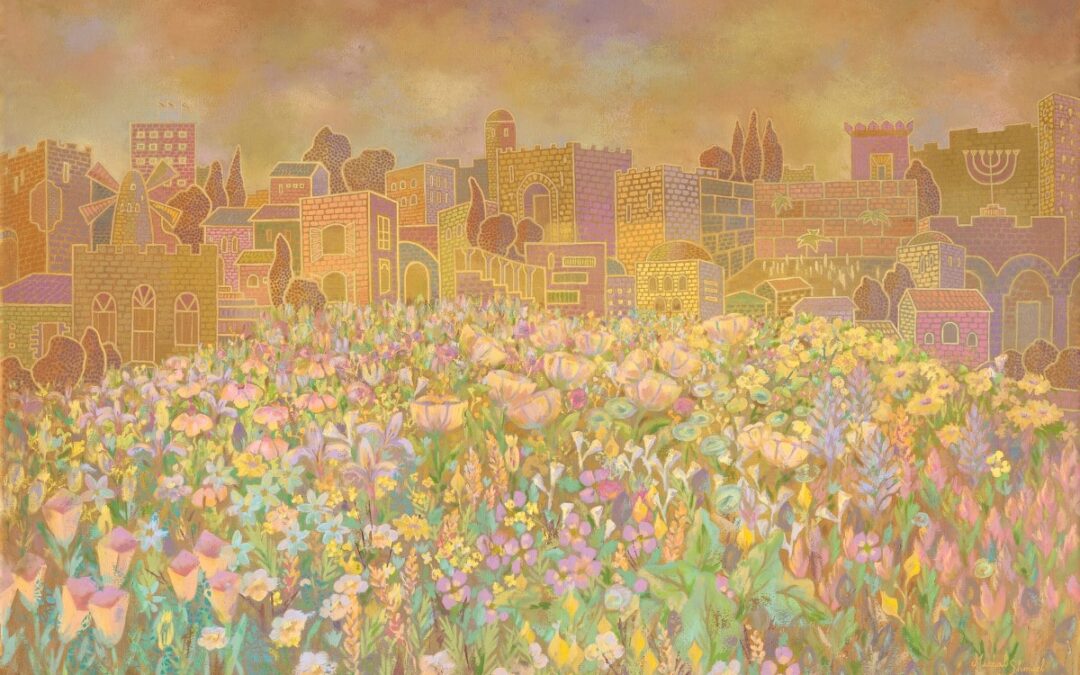
A Painting of Jerusalem: Where History Meets Serenity
What if a single work of art could offer a quiet sanctuary, a place where ancient history and personal peace converge? This is the profound experience offered by artistic representations of a timeless city.
These creations are far more than simple landscapes. They act as bridges, connecting modern viewers to deep spiritual and cultural roots. The artistic vision captures how wildflowers soften iconic structures, revealing a multi-layered essence.
This art invites you to explore serenity and heritage from within your own home. It stands as a unique meditation on faith and the enduring human spirit.
Key Takeaways
- Artistic works of Jerusalem serve as a bridge between ancient history and modern spiritual seekers.
- This form of art transcends traditional landscape depiction to become a meditation on faith and heritage.
- These creations are designed to bring a sense of serenity and contemplative space into a home environment.
- Jerusalem paintings uniquely balance historical significance with natural beauty and artistic innovation.
- The art form connects viewers to a collective cultural memory while allowing for personal reflection.
The Essence of Jerusalem in Art
A great work of art does not just depict a place; it conveys its very spirit. This is the central mission for creators focusing on a location of profound spiritual significance. The goal is to capture intangible qualities—faith, history, peace—that resonate across cultures.
This artistic endeavor is both a privilege and a significant challenge. The creator must distill a complex identity into a visual form that honors its sacred character. It must remain accessible to a global audience, regardless of personal background.
A distinctive visual language emerges from the interplay of light, ancient architecture, and natural elements. Soft sunlight on stone, wildflowers near historic walls—these elements create a unique atmosphere. This specific combination defines what many recognize as Jerusalem art.
The emotional response from viewers is powerful. Some feel a connection to memory and heritage. Others discover a deep, new resonance through the artistic interpretation itself.
Contemporary approaches to this subject differ markedly from historical ones. Modern creators blend current sensibilities with timeless respect. The following table highlights key shifts in artistic focus:
| Aspect | Historical Focus | Contemporary Focus |
| Primary Subject | Architectural grandeur and religious symbolism | Emotional atmosphere and personal connection |
| Use of Light | Dramatic, symbolic contrast | Soft, neutral, and serene tones |
| Role of Nature | Background element | Integrated symbol of renewal |
Ultimately, this form of creative expression plays a vital role. It preserves the feeling of the city for those seeking connection. A single painting can become a bridge, carrying the essence of an extraordinary place into homes and hearts worldwide.
Inspiration Behind A Blooming Jerusalem
During the city’s annual blooming season, a remarkable transformation occurs that artist Michal Shmuel sought to capture. Her approach focuses on the brief period when native wildflowers emerge across the urban landscape. This seasonal change symbolizes the eternal capacity for regeneration that defines the sacred place.
The artistic vision centers on renewal through nature’s cycles. Native flora in the foreground serves dual purposes. They provide accurate botanical representation while metaphorically expressing life-giving spiritual essence.
Shmuel’s creative decisions generate compelling visual tension. Ancient stone structures contrast with ephemeral floral beauty. This juxtaposition presents the location as a living, breathing entity rather than a static monument.
The resulting artwork invites viewers to experience continuous renewal. It connects artistic choices to broader themes of vitality and hope. This particular painting offers a fresh perspective on spiritual resilience through natural symbolism.
Symbolism in Wildflowers and Nature
Wildflowers emerging from ancient stone tell a story of resilience that transcends mere visual appeal. These native blooms represent life’s persistence in challenging terrain, offering powerful metaphors for spiritual continuity.
The botanical accuracy grounds the artistic vision in reality while elevating it to a spiritual metaphor. Viewers connect to an authentic experience through carefully rendered native species.
A compelling dialogue unfolds between delicate, temporary blooms and eternal architectural structures. This contrast highlights the coexistence of transience and permanence within the sacred landscape.
Foreground wildflowers invite audiences to look beyond iconic landmarks. They discover the city’s natural dimension, often overlooked in traditional representations.
Seasonal blooming embodies renewal symbolism, reflecting the location’s role in spiritual rebirth. Each flowering cycle represents continuous revelation across generations.
Natural elements soften the urban environment while maintaining profound reverence. This approach makes the artistic representation more approachable without sacrificing sacred character.
The careful integration of flora demonstrates how contemporary painting techniques honor traditional subjects. These artistic paintings balance historical significance with organic beauty.
The Timeless Beauty of Jerusalem’s Architecture
In artistic representations, Jerusalem’s built environment becomes more than mere structures—it embodies the city’s enduring spirit. The distinctive architectural character of the Old City creates visual unity across centuries. Honey-colored stone connects diverse cultural influences into a cohesive whole.
Jerusalem stones themselves emerge as characters within each composition. Their texture and coloration whisper stories of age, weather, and countless shaping hands. This organic quality adds profound depth to the artistic interpretation.
Iconic structures define the city’s unmistakable skyline. Ancient towers and religious buildings contribute to a profile recognized worldwide. Each element carries weight and meaning for diverse audiences.
Artists face the challenge of balancing historical accuracy with emotional resonance. Architectural elements must remain recognizable while speaking to the heart. This delicate balance requires deep cultural understanding and sensitivity.
| Architectural Element | Historical Significance | Artistic Representation |
| Honey-Colored Stone | Local quarry material has been used for millennia | Warm, textured surfaces showing age and character |
| Ancient Towers | Defensive structures with a rich history | Silhouetted forms against soft skies |
| Religious Buildings | Centers of Jewish worship and community | Simplified forms emphasizing spiritual essence |
The timeless quality of Jerusalem’s architecture provides stability within compositions celebrating change. This painting of the Old City of Jerusalem captures continuity amid natural renewal. The built environment stands as a testament to the enduring human spirit.
A Soft Light: The Role of Neutral Tones
Soft, restrained tones provide the visual language for expressing reverence and serenity in cultural artwork. This deliberate choice creates an atmosphere that encourages quiet reflection rather than dramatic impact.
The neutral palette honors the natural appearance of local stone, which glows with subtle warmth under Mediterranean sunlight. This material shifts from cream to gentle gold throughout the day, capturing authentic beauty.
Restrained color choices maintain artistic integrity while expressing genuine reverence. They prevent the composition from becoming overly sentimental, allowing the spiritual essence to emerge naturally.
Light plays the crucial role of activating these neutral tones. It creates depth and dimension without relying on high contrast or artificial drama. The quiet illumination suggests specific peaceful times—early morning or late afternoon.
This approach makes the artwork versatile for various interior spaces. The neutral scheme preserves emotional impact while adapting beautifully to different environments. It maintains its essential character across diverse settings.
The resulting painting achieves a balance between historical accuracy and contemporary sensibility. It offers viewers a contemplative space that feels both timeless and personally accessible.
Texture and Depth in the Jerusalem Sky
Above the timeless architecture lies a canvas of ever-changing atmospheric conditions that mirror the city’s spiritual duality. The textured sky becomes an active participant rather than a passive background, adding dimensional quality to the entire composition.
Artists achieve this atmospheric depth through careful oil application techniques. Layered brushwork builds texture that interacts dynamically with light sources. This technical approach transforms flat surfaces into dimensional spaces that seem to breathe.
The shifting sky serves as a powerful metaphor for the location’s essence—constantly transformed by historical currents while maintaining fundamental spiritual constancy. Cloud formations and light patterns represent this eternal paradox visually.
This atmospheric treatment creates crucial compositional balance. The weighted architectural elements below find counterpoint in the expansive, textured skies above. The effect suggests infinite space while grounding the scene in recognizable reality.
Specific atmospheric qualities make the sky as distinctive as the city’s stone structures. The particular light and air create a signature appearance that knowledgeable viewers instantly recognize. This unique character adds authentic depth to artistic representations.
Exploring the Historical Layers of Jerusalem
The challenge of representing Jerusalem’s history visually requires artists to navigate millennia of accumulated cultural significance. Archaeological discoveries reveal continuous habitation spanning countless civilizations. Each era left distinctive marks on the urban landscape.
Artistic representation compresses these historical layers into single images. Creators develop visual palimpsests that honor complexity while maintaining coherence. This approach allows viewers to appreciate the city’s extraordinary depth.
Depicting a location where every stone witnessed pivotal moments presents unique challenges. Contemporary creators address layered history without becoming overwhelmed by significance. They balance creative freedom with cultural sensitivity and historical accuracy.
| Representation Approach | Historical Focus | Contemporary Method |
| Time Compression | Single era emphasis | Layered chronology |
| Cultural Elements | Dominant civilization | Integrated influences |
| Artistic Responsibility | Documentary accuracy | Emotional authenticity |
Understanding these historical layers transforms casual observation into informed contemplation. Viewers appreciate human persistence and faith through this deeper engagement. The artistic interpretation becomes a bridge connecting past and present.
Painting of Jerusalem: A Closer Look
The artwork’s power emerges when one studies the interplay between foreground detail and atmospheric depth. A systematic examination reveals how each layer contributes to the complete spiritual journey.
Foreground wildflowers establish an immediate connection through delicate brushwork. Middle-ground architecture provides historical anchoring with structured forms. The expansive sky offers contemplative space through textured application.
Specific artistic choices create cohesive visual harmony. Soft color transitions guide the eye naturally across the composition. Spatial arrangement balances intimacy with grandeur.
| Artistic Element | Technical Approach | Emotional Impact |
| Foreground Flora | Fine, detailed brushstrokes | Personal connection and renewal |
| Architectural Forms | Structured, layered application | Historical reverence and stability |
| Atmospheric Sky | Textured, blended techniques | Spiritual contemplation and depth |
Repeated viewing reveals discoveries within this Jerusalem painting. Subtle details emerge with sustained attention. The work rewards patient observation with deeper meaning.
The artwork invites personal interpretation while maintaining a clear artistic vision, creating space for individual spiritual responses.
This closer examination transforms initial appreciation into a nuanced understanding. Technical mastery serves profound emotional expression. The painting “A Blooming Jerusalem” serves as a gateway to both artistic appreciation and spiritual reflection.
From Past to Present: A City Rooted in Time
The concept of a place anchored in time finds powerful expression through earthy green tones that connect the urban landscape directly to its foundational soil. This artistic vision portrays the city not as separate from the earth but as a natural extension of it.
Earthy greens dominate the palette, emphasizing an organic bond with the land. This choice grounds the scene in physical reality while suggesting deeper, spiritual roots. The composition bridges millennia, presenting the location as both ancient and vibrantly contemporary.
Blooming flowers in the foreground symbolize ongoing vitality. They counter any perception of the area as a static historical relic. Their presence asserts that life and renewal are perpetual forces here.
The Tower of David stands as a proud architectural anchor within the scene. It serves as a clear reminder of a rich, layered history. Its presence symbolizes eternal significance amidst constant change.
This approach to the artwork honors tradition while asserting continued relevance. The earthy color scheme allows for personal spiritual interpretation. It confirms the city’s living presence in modern consciousness, making this painting a timeless bridge.
Interweaving Spirituality and Natural Renewal
More than capturing a landscape, this creative work establishes a contemplative dialogue between eternal faith and living nature. The artistic vision seamlessly blends sacred heritage with organic vitality.
Natural elements serve as powerful spiritual metaphors rather than mere decorative features. Blooming wildflowers and shifting skies reinforce the location’s sacred character. They suggest divine presence within creation itself.
Compositional choices deliberately slow the viewing experience. The artwork functions as a visual meditation, inviting deep reflection. It counters contemporary rushed perception with deliberate pacing.
Different faith traditions discover personal meaning in the same Jerusalem painting. The ”Kotel in Jerusalem” and other landmarks carry varied but equally profound significance. This universal accessibility makes the work spiritually inclusive.
The painting extends a gentle invitation to embrace serenity. It offers spiritual nourishment through artistic encounter. These paintings become sanctuaries for personal reflection and peace.
Artistic Techniques and Material Excellence
Behind every spiritually resonant artwork lies a careful selection of materials and techniques that enhance its emotional impact. The physical interaction between medium and subject determines how effectively sacred themes translate into visual experience.
Balancing Light and Shadow in the Artwork
Masterful handling of illumination distinguishes exceptional spiritual artwork. Mediterranean sunlight creates distinctive patterns that require sensitive interpretation.
The media’s capacity for subtle tonal gradations enables artists to capture both brilliant highlights and soft shadows. This balance reveals the spiritual essence within architectural forms and natural landscapes.
The resulting painting possesses a luminous quality that feels both timeless and personally accessible. Material excellence supports this delicate interplay of light and shadow.
Capturing Jerusalem’s Iconic Landmarks
Among the most challenging subjects for any artist are the iconic landmarks that carry profound spiritual weight for millions of Jewish people worldwide. These sites demand more than technical skill—they require deep cultural understanding and respectful interpretation.
Creating meaningful wall art for such locations involves balancing aesthetic appeal with sacred significance. The artist becomes a bridge between physical representation and spiritual essence.
Jerusalem Stones and Their Enduring Grace
The distinctive limestone blocks, known locally as Jerusalem stone, possess a unique character. Their warm, honeyed hue and textured surface tell a story of ancient craftsmanship and geological history.
These stones connect contemporary viewers directly to the builders of antiquity. Their enduring grace provides visual continuity across centuries of history.
Artists must capture both the physical texture and the symbolic weight of this material. The stone itself becomes a character in the composition, speaking to permanence and faith.
Focusing on the Sacred Western Wall
Depicting the Western Wall, known as the Kotel in Jerusalem, presents a particular honor and responsibility. This site represents one of Judaism’s holiest places of prayer and pilgrimage.
Artistic approaches must capture the wall’s physical monumentality while suggesting the spiritual intensity concentrated there. The challenge lies in conveying quiet devotion through visual means.
This wall art serves dual purposes in home environments. It functions as a beautiful decoration while creating a meaningful connection to sacred space.
The resulting Jerusalem painting invites contemplation of faith, history, and humanity’s need for spiritual anchors. It becomes a presence that honors both artistic vision and deep reverence.
Diverse Art Options and Customization
The journey to owning meaningful spiritual art continues with personalized selection options that honor individual preferences and spaces. Collectors can choose from an extensive product multiple variants designed to suit different environments and budgets.
Multiple Variants for Personalized Selection
Each artwork offers options that may be chosen from various sizes and presentation formats. The product’s multiple variants ensure accessibility across different price points while maintaining quality.
Contextualizing Jerusalem: Bridging History and Modernity
The universal resonance of Jerusalem-themed art stems from a delicate interplay between deep local roots and broad human connection. These creations draw authenticity from an artist’s direct experience with the city’s unique atmosphere and heritage.
This foundation allows the artwork to transcend geographic and cultural boundaries. It speaks to a universal human spiritual yearning, making it meaningful in diverse settings worldwide.
Local Influences with Global Appeal
Artists approach the subject from various perspectives, each bringing a unique vision. They engage with shared subject matter while offering personal interpretations.
Presentation options cater to different home environments.
Gold accents or frames can enhance a piece significantly. They add richness appropriate to the subject’s significance without overwhelming the artwork.
Variations like night scenes reveal the city’s transformed character. Darkness and artificial illumination create a different mood and feeling.
These paintings function beautifully within a home. They become focal points for reflection and conversation.
The right piece complements diverse interior design approaches. It adds both beauty and profound meaning to any living space.
Conclusion
This exploration reveals how Jerusalem art masterfully weaves together historical weight, spiritual meaning, and natural elegance. It creates a powerful bridge, bringing the city’s profound essence directly into personal spaces across the globe.
These works extend a special invitation. They ask viewers to look beyond the surface, to reflect, and to forge a personal bond with the city’s story. This is not merely decorative art; it is an investment in lasting beauty and spiritual enrichment.
Finding the right piece is a personal journey. We encourage you to explore the available collection. Seek the work that resonates most deeply with your own connection to this remarkable place.
A single creation holds transformative power. It can become a portal to quiet contemplation, cherished memory, and a renewed appreciation for the locations that shape our shared human experience. Take a moment to look closely and discover what speaks to you.
FAQ
What materials are used in these Jerusalem artworks?
Michal Shmuel’s pieces are meticulously crafted using premium paints on canvas. This traditional technique provides exceptional texture and depth, ensuring each artwork possesses a timeless quality and rich visual appeal for home or gallery display.
How does the artist capture the Old City’s spiritual essence?
Shmuel’s work interweaves Jerusalem’s sacred landmarks, like the Western Wall (Kotel), with symbols of natural renewal. This unique approach bridges profound spirituality with the serene beauty of wildflowers and the city’s iconic architecture.
What is the shipping process for a canvas purchase?
Each artwork is carefully packaged to ensure secure transit. Shipping options are provided via email, with details on delivery timelines and tracking information sent via email once the order is processed and leaves the studio.
Can I see the artwork in different lighting conditions?
The product pages feature high-quality images that showcase the art in various settings. The balanced use of light and shadow in Shmuel’s technique ensures the piece maintains its depth and serenity, whether viewed in daylight or soft evening light.