
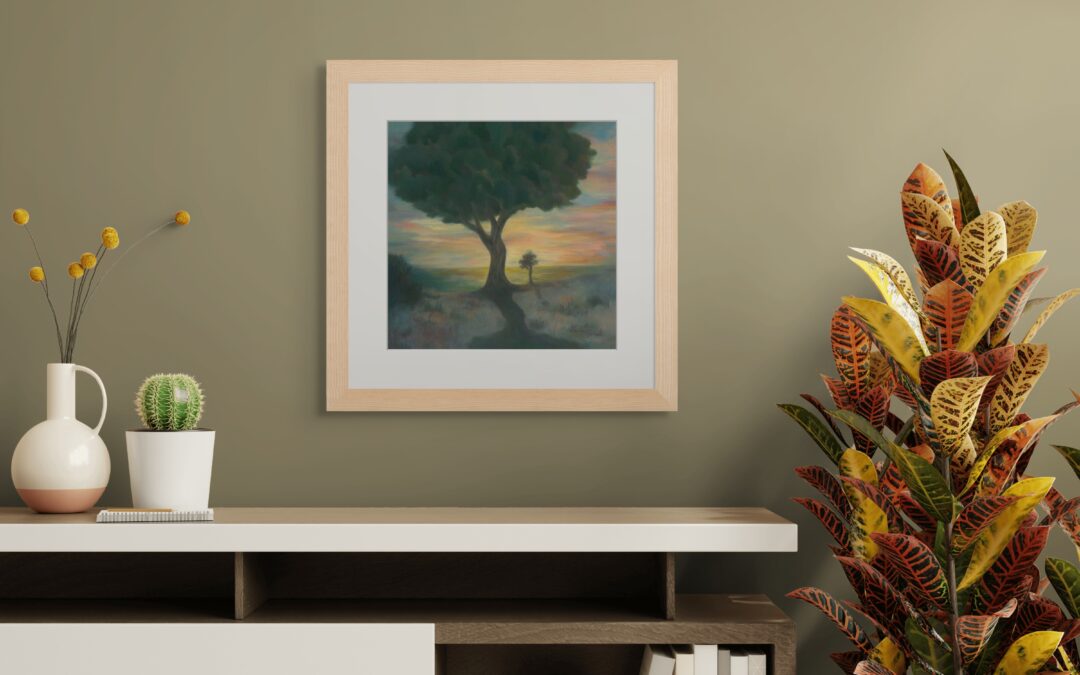
What if a single painted tree could carry the weight of thousands of years of Jewish faith, memory, and hope? The symbolism of trees in Judaica art is much deeper than it seems at first. These images tell stories of exile and return, of roots gripping sacred ground, and of branches reaching toward the divine.
Israeli artist Michal Shmuel brings this ancient connection to life through her art. Born in 1972 in Bnei Brak, she expresses her deep bond with the Holy Land in every painting. Her words say it all: “The Land of Israel lives in me and comes out of me. Bright, shiny, sacred.” Her tree paintings cover olive groves, Jerusalem’s stones, and the rolling hills of Israel.
Judaica art featuring trees speaks to something universal yet deeply specific. Each tree reflects Jewish identity shaped by centuries of perseverance. From the Tree of Life in Torah scrolls to sunlit olive branches in modern galleries, these works connect viewers to a living spiritual tradition.
This article delves into the rich layers of Jewish paintings of trees. It explores their meaning from biblical roots to today. Whether you’re a collector, a spiritual seeker, or an art lover, these works invite you into a story that’s ongoing on canvas and in the soul.
Key Takeaways
Trees in Judaica art represent growth, resilience, and the deep spiritual bond between the Jewish people and the Land of Israel.
Michal Shmuel’s tree paintings draw from personal heritage and devotion, adding an authentic voice to contemporary Israeli art.
Olive trees, the Tree of Life, and root imagery each carry distinct symbolic meanings within Jewish visual tradition.
Color, texture, and form in these works evoke the physical landscape of Israel while expressing timeless spiritual truths.
Judaica tree symbolism in art bridges ancient sacred texts with modern artistic expression.
Collecting Jewish paintings of trees is a meaningful way to honor cultural legacy and bring spiritual depth into any space.
The Deep-Rooted Connection Between Trees and Jewish Spiritual Tradition
In Jewish culture, trees hold deep meaning. They symbolize the soul’s journey, time’s passage, and the quest for truth. Trees connect people to the land, a bond lasting thousands of years.
Artist Michal Shmuel draws on this connection. Raised by parents who moved from Morocco, she learned about faith and resilience. Her art shows the spiritual, emotional, and physical life of a Jewish woman, mother, and artist in Israel.
Living Metaphors for Human Life in Jewish Thought
Jewish tradition sees a person as a tree. The Torah says, “For a person is like the tree of the field” (Deuteronomy 20:19). This idea shows how nature’s symbols are deeply personal. Just as trees need strong roots to grow, people need strong values to thrive.
Roots represent ancestry and faith.
The trunk stands for strength and character.
Branches symbolize growth and future generations.
Fruit reflects good deeds and spiritual output.
Sacred Texts Brought to Life Through Imagery
From Genesis to Psalms, trees in art come from scripture. The Garden of Eden, the burning bush, and Lebanon’s cedars show divine connection. These images inspire artists to bring sacred words to life.
An Eternal Symbol Across Generations
The tree of life symbol, Etz Chaim, represents the Torah. It stands for wisdom, nourishment, and eternal life. This symbol is found in synagogues, sacred objects, and art worldwide. It reminds every generation of its spiritual power.
Symbolism of Trees in Judaica Art
Trees hold deep meaning in Jewish art. They symbolize survival, faith, and a connection to sacred land. The cultural significance of trees in Judaism spans centuries, linking ancient stories to today’s art.
Each tree in a painting tells a story of a people shaped by devotion and time. It’s a tale of a community bound by tradition and hope.
Growth and Endurance as Core Themes in Jewish Visual Expression
Growth and endurance are at the heart of Judaica art. A tree reaching for the sky mirrors the Jewish journey. It’s rooted in tradition but always looks to the future.
Artists show this by painting olive trees weathered by wind and sun. These trees stand as symbols of perseverance and unwavering faith.
Trees Representing Heritage and Resilience Through Generations
In Jewish art, trees represent heritage and resilience. The roots of a tree are as important as its leaves. They remind us that our identity comes from our ancestors and traditions.
These roots symbolize the strength of family and community. They show how our past shapes us.
Olive branches symbolize peace, endurance, and love for the Land of Israel.
Intertwined roots reflect family bonds and communal strength.
Seasonal leaves represent cycles of loss, hope, and rebirth.
Spiritual Connection Between Earth and Heaven in Tree Imagery
Trees in Judaica art connect earth and spirit. A tree’s roots are in the earth, while its leaves touch the sky. This creates a visual prayer between the physical and divine.
Artists use this image to honor the Jewish spirit. They turn canvas into a place where past and present meet in quiet reverence.
Michal Shmuel’s Contemporary Judaica Tree Art Collection
Israeli Jewish painter Michal Shmuel brings a deeply personal vision to the world of contemporary Judaica tree art. Her work draws from childhood memories of her father’s olive grove. There, faith and heritage took root in the land’s soil. Each canvas carries that emotional weight, transforming trees into spiritual narratives.
The Michal Shmuel’s Judaica Tree Collection spans several distinct series. Each explores a unique facet of Jewish life and identity. Symbolic trees in her painting series serve as bridges between the ancient and the modern, the earthly and the divine. Her oil on canvas pieces range in size, with works measuring 180×90 cm and 100×150 cm. These capture Jerusalem’s timeless beauty in sweeping, immersive scale.
Key paintings within the collection include:
The Thinking Tree — a meditative piece exploring inner wisdom,
Roots of Resilience — evoking inner strength and devotion,
The Eternal Olive Tree — a tribute to perseverance and ancestral roots,
Roots and Stones — blending Jerusalem’s sacred landscape with living growth,
To Feel a Tree — an intimate, tactile exploration of nature’s presence.
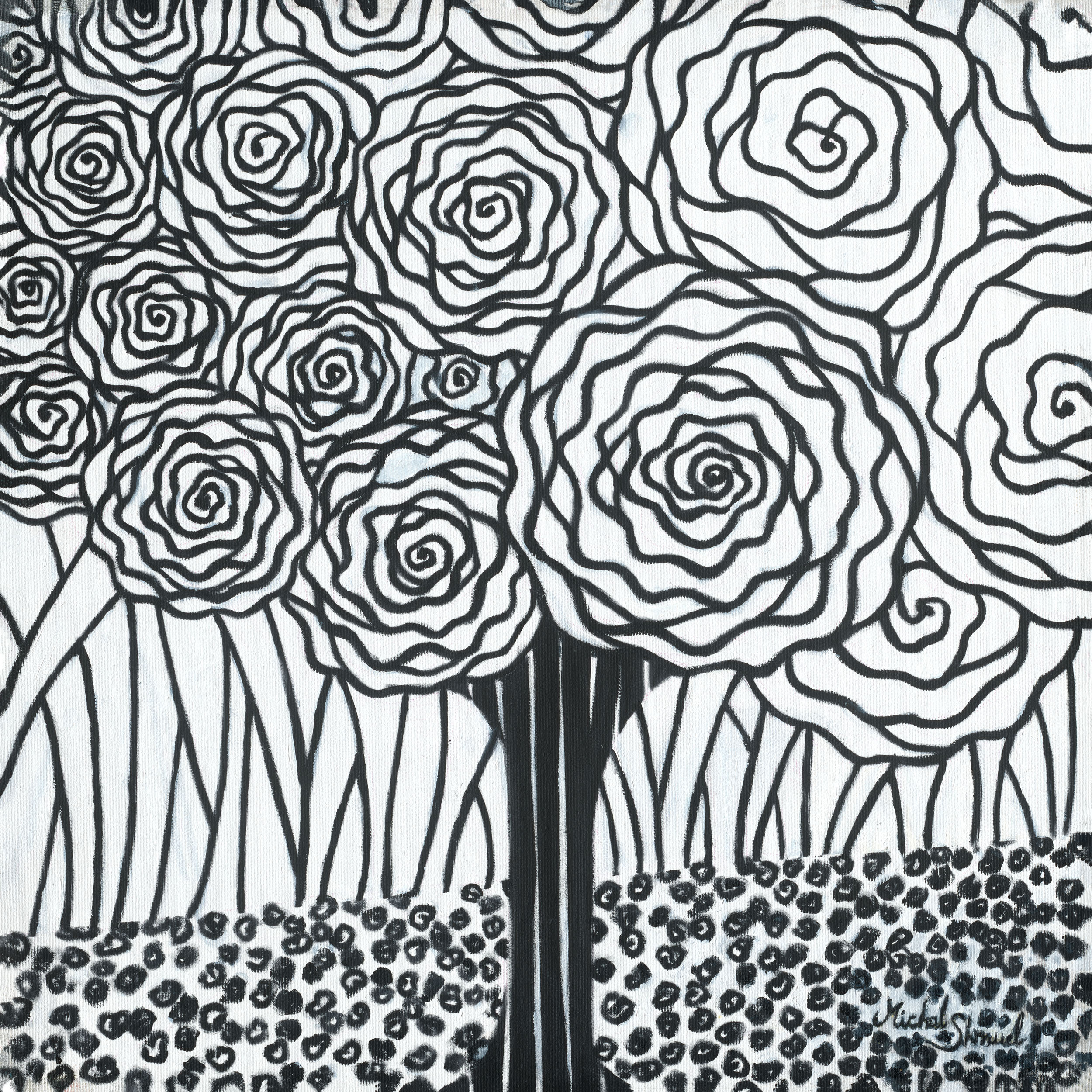
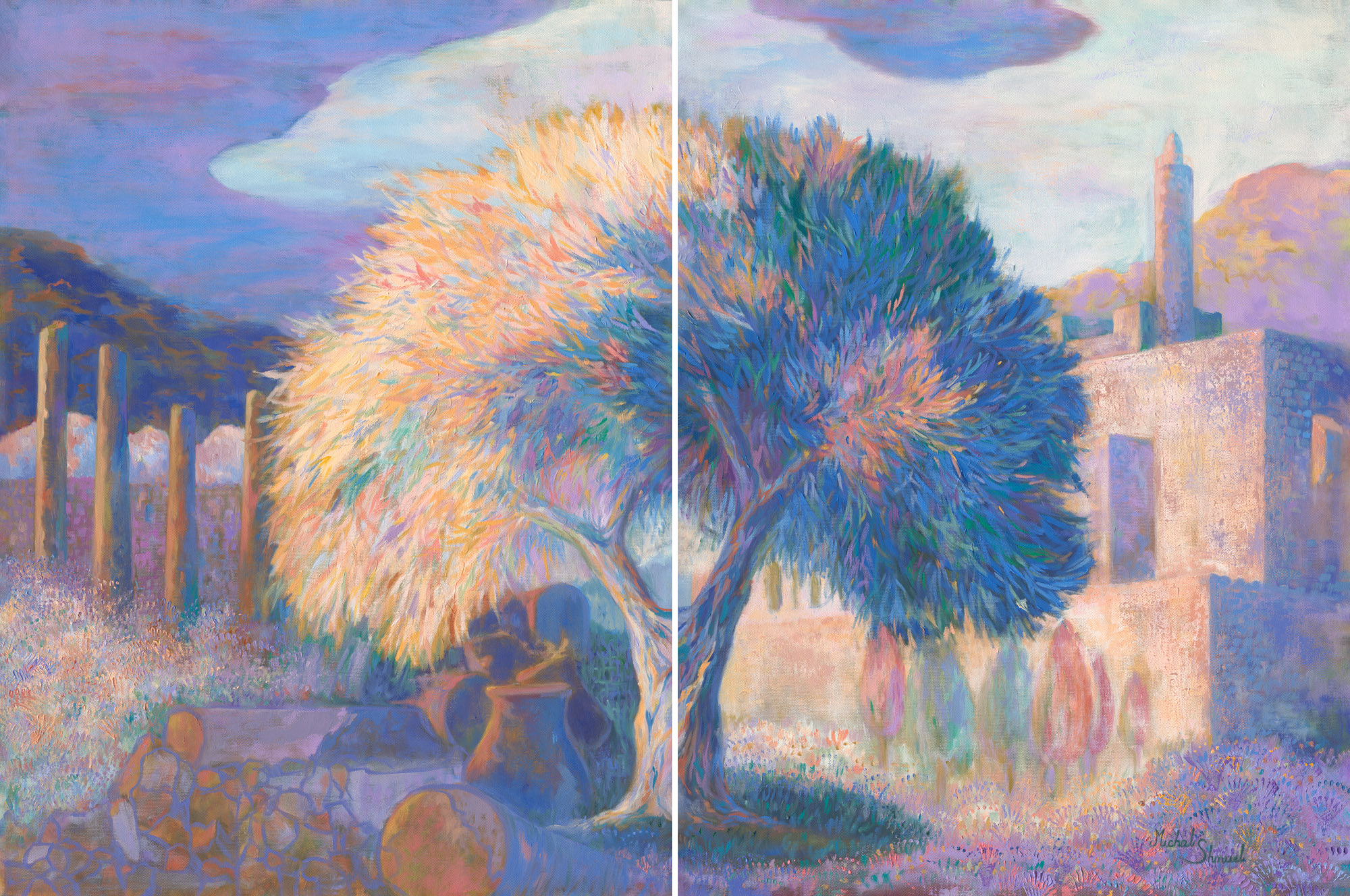
This body of work stands as a defining contribution to contemporary Israeli Judaica art. It invites viewers to experience Jewish tradition through the living beauty of trees.
The Olive Tree: A Testament to Jewish Perseverance and Peace
The olive tree holds a special place in Jewish culture. Its twisted trunk and silvery leaves have seen centuries of history in the Land of Israel. The olive tree symbolizes survival and strength, found in ancient groves and original Judaica paintings.
Cultural Significance of Olive Trees in the Land of Israel
Olive trees can live for thousands of years, making them among the oldest living things on earth. In the Land of Israel, some groves date back to biblical times. The olive branch is a symbol of peace and renewal, connecting Jewish communities to the land.
Olive oil fueled the menorah in the ancient Temple in Jerusalem.
The tree symbolizes peace, abundance, and divine blessing.
Ancient olive groves thrive in places like the Ella Valley and Galilee.
Personal Heritage Reflected in Michal Shmuel’s “Eternal Olive Tree”
Michal Shmuel’s art comes from a deep personal connection. Growing up near the Ella Valley, Shmuel was shaped by her father’s olive grove. Her “Eternal Olive Tree“ shows a shimmer in the sun with detailed textures. Each groove tells a story of strength and struggles passed down through generations.
Olive Groves as Sacred Spaces in Jewish Memory and Art
Olive groves are sacred places where memory and nature meet. Artists and pilgrims have prayed and reflected under their branches. This makes olive groves a common theme in Judaica paintings.
Through the Roots of Resilience painting, Shmuel turns these sacred groves into art. Her work connects memory and meaning, inviting viewers to feel the significance of Jewish art trees and roots in every brushstroke.
Understanding the Roots and Stones Painting
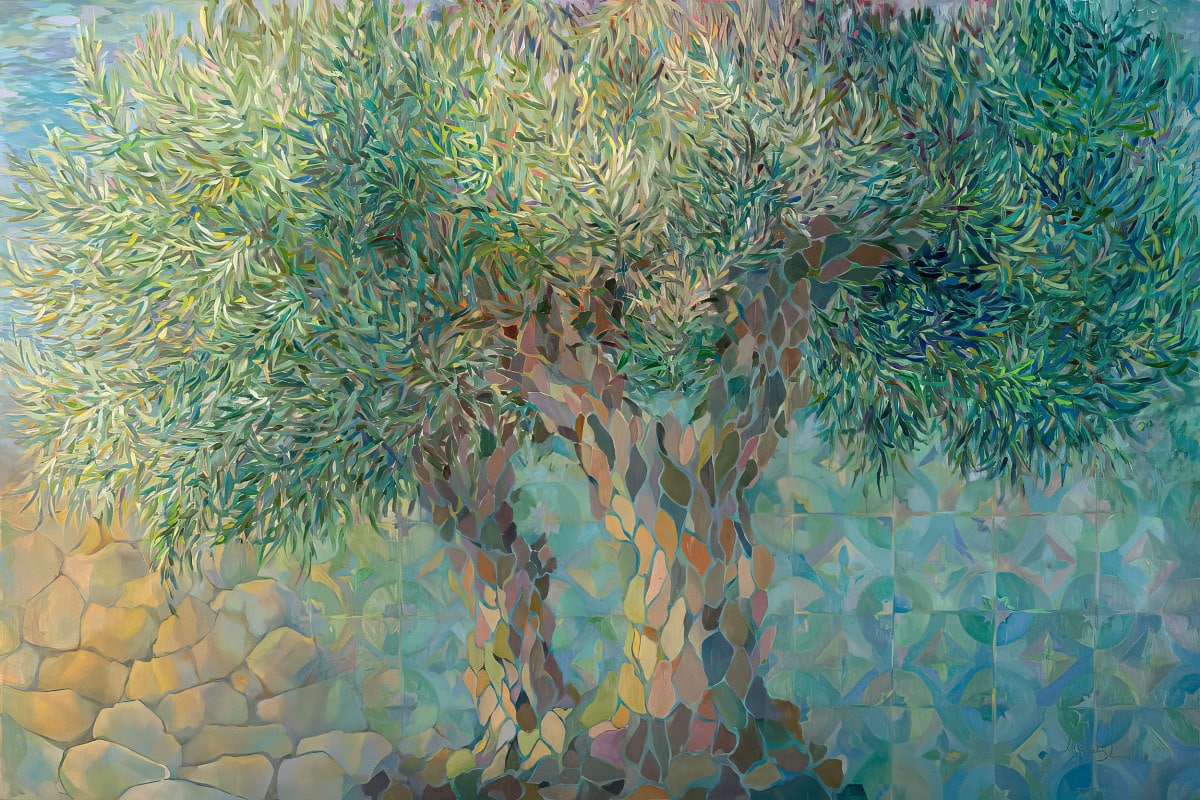
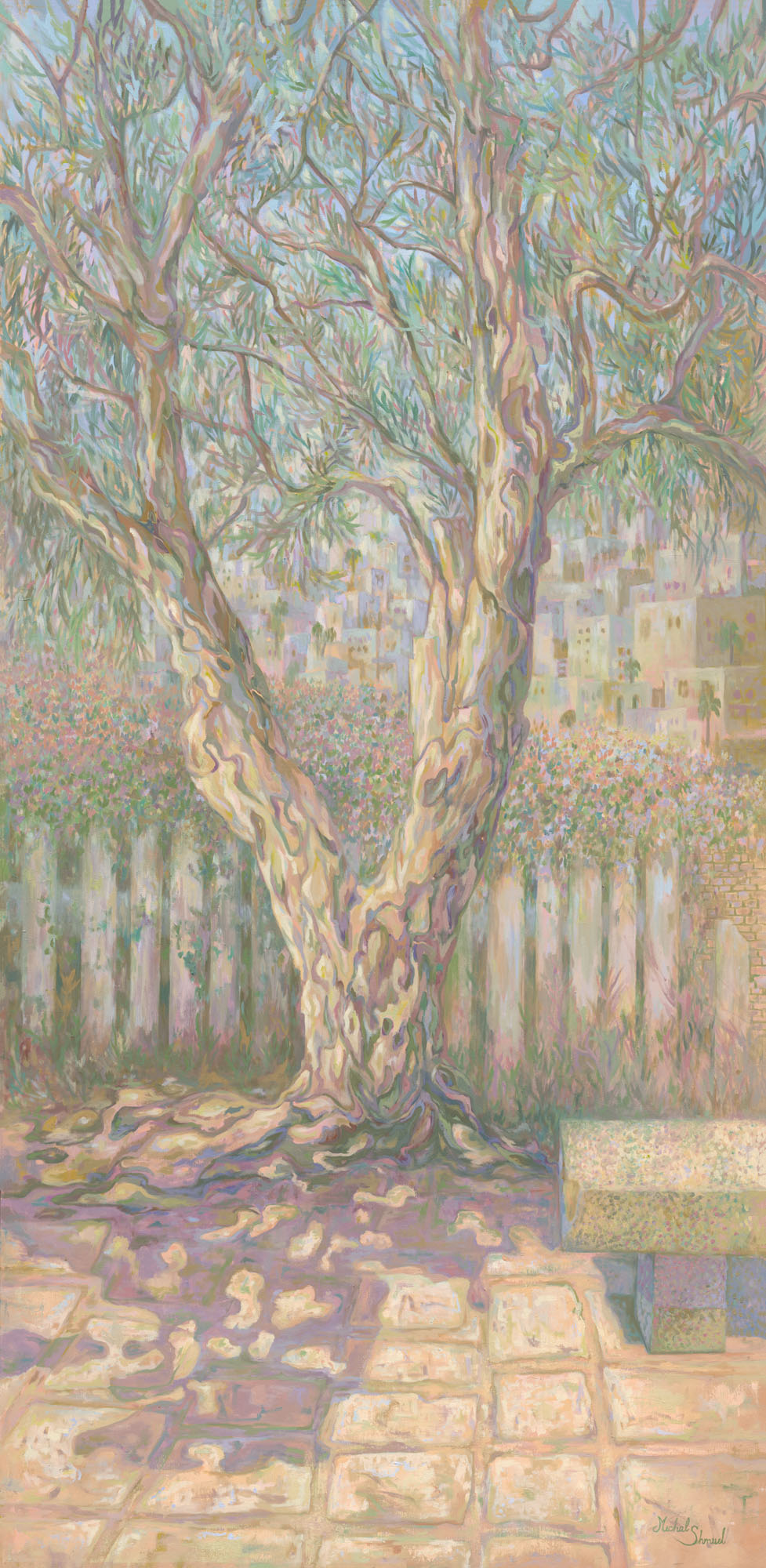
Some artworks do more than show a scene. They show a people’s spirit. Michal Shmuel’s Roots and Stones painting does just that. It’s a 180×90 cm oil on canvas painting of an olive tree in a sunlit garden.
The tree’s roots dig deep into the earth, steady and strong. Jerusalem glows softly in the background, painted with care and respect.
This piece is a key part of Michal Shmuel’s art. It mixes personal memories with a shared identity. The tree holds family stories, land ties, and a strong will to keep going.
Deep Roots as Symbols of Ancestral Connection
In Jewish art, roots have deep meaning. They show the invisible ties between generations. The olive tree’s roots in this painting reach down, holding onto centuries of tradition.
Every root in the earth tells the story of someone who came before us and chose to stay.
This painting shows the link between the past and the present in a clear way. The roots symbolize resilience, continuity, and peace.
The Interplay Between Jerusalem’s Sacred Stones and Living Trees
The painting shows two powerful symbols: ancient stone and living wood. Jerusalem’s stones carry thousands of years of history. The tree grows next to them, drawing life from the same ground.
This interplay connects the sacred with everyday life. It shows spiritual life grows through our daily lives, like a tree among stones.
Tree of Life Motifs in Jewish Visual Art and Their Meanings
Tree motifs in Jewish visual art show the unity and diversity of the Jewish community. Each part of the tree holds spiritual meaning. These paintings show life, devotion, and memory in a way words can’t.
The Tree of Life has deep meaning in Jewish art and culture. It spans centuries, from ancient manuscripts to today’s paintings. It stands for Torah, wisdom, and the bond between all living things. Artists use it to share stories of faith and community.
To understand the heritage in Judaica paintings, look at the visual elements:
Roots — ancestral bonds and deep connections to the Land of Israel,
Trunk — strength and resilience through exile, persecution, and renewal,
Branches — the spread of Jewish communities across the world,
Leaves and fruit — good deeds, spiritual growth, and hope for future generations.
Each painting invites quiet contemplation on shared heritage. Trees show how Jewish identity grows while staying rooted in tradition.
These visual stories take us through Jewish history, feeling both timeless and personal. The colors, forms, and symbols in tree art connect us to sacred lessons passed down through generations.
Color, Form, and Symbolism in Contemporary Israeli Judaica Art
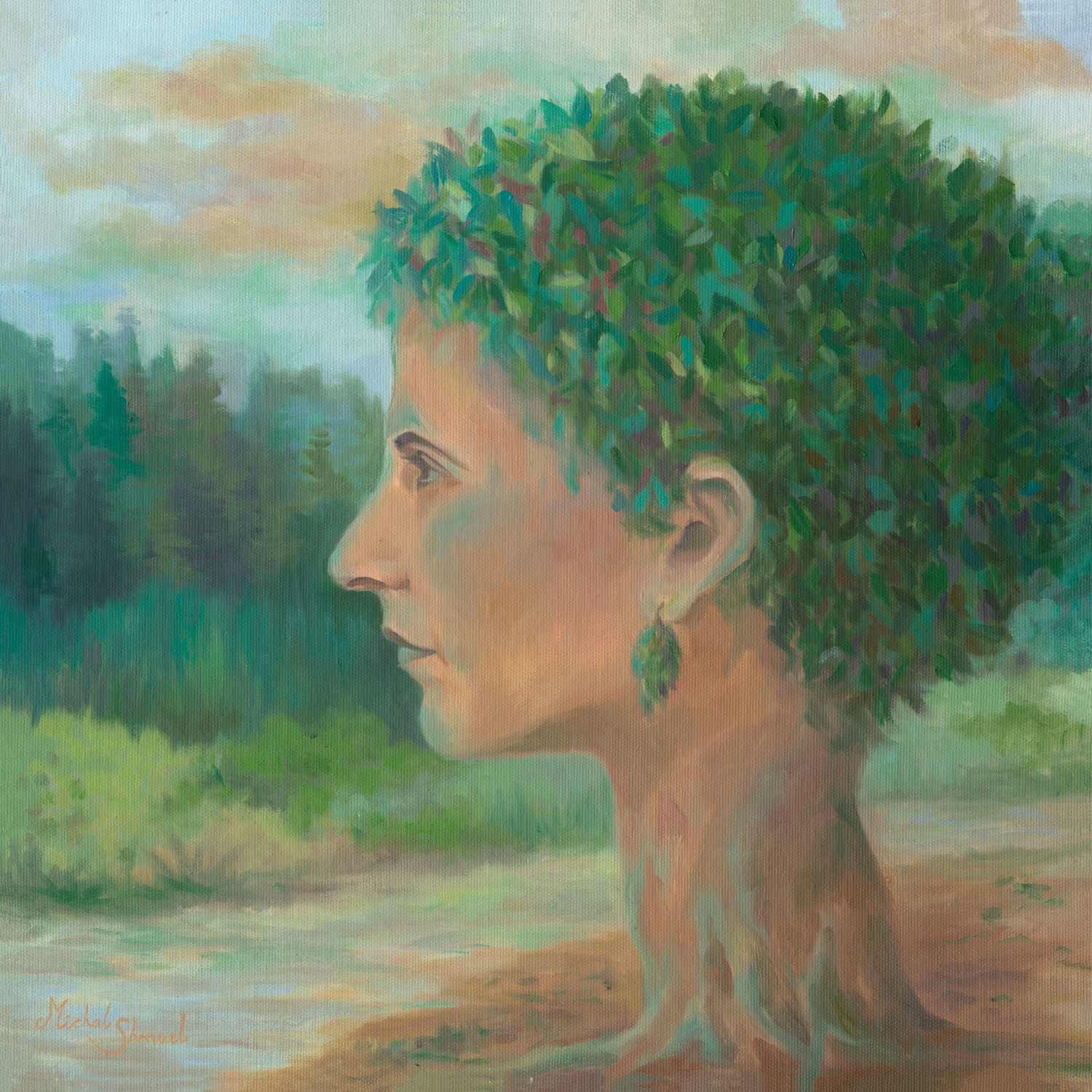
Every brushstroke in Judaica tree art has meaning. Colors and shapes come together to tell a story. They create a powerful experience for the viewer.
“Art speaks where words fall short — color becomes the language of the soul.”
Earthy Tones Evoking the Warmth of the Ella Valley
The Ella Valley is special in Jewish history. Its landscapes inspire the artworks’ warm colors. Ochres, siennas, and amber tones connect the viewer to the land.
Textured Trunk Techniques Embodying Generational Strength
Tree trunks in these artworks are complex. Their textures show the struggles and strength of past generations. This makes each trunk a story of survival.
Shimmering Green Leaves Symbolizing Hope and Renewal
Green leaves contrast with the trunks and backgrounds. They symbolize hope and new beginnings. This contrast shows how new life grows from strong roots.
These artistic choices make the artworks meaningful. They show how trees represent continuity and legacy in Jewish culture.
Trees Illustrating Continuity and Legacy in Jewish Culture
In Jewish culture, trees hold memories. They are living witnesses to generations of faith and connection to Israel. For those looking to buy Michal Shmuel art, each piece tells a story of continuity through roots and branches.
“A tree planted by one generation shelters the next. Its shade is a gift that stretches across time.”
Bridging Past and Present Through Natural Imagery
Michal Shmuel’s father cared for an olive grove his whole life. His love for the trees taught a powerful lesson: the olive tree symbolizes peace, perseverance, and love for the Land. This heritage shines through in Shmuel’s paintings.
Her art connects past and present. Each painting honors a family’s journey and its connection to sacred soil. For those looking to buy Judaica tree paintings online, Shmuel’s work offers authentic emotion rooted in real experience.
The Annual Ritual of Tending to Sacred Groves
Visiting the family grove was a yearly ritual. It was almost spiritual. These visits showed that caring for trees is caring for the legacy itself. This mirrors the Jewish festival of Tu BiShvat, which celebrates trees and our duty to nature.
This ritual quality is seen in Shmuel’s art. Her Judaica art with tree themes for sale shows the cycle of Jewish life — planting, nurturing, harvesting, and starting anew.
Olive groves as spaces of family memory and spiritual reflection.
Annual visits reinforce generational bonds to the Land.
Art as a vessel for preserving cultural continuity.
Tree imagery connecting personal story with collective Jewish heritage.
These paintings are timeless gifts. They honor the artist’s roots and the Jewish story of resilience.
Where to Buy Judaica Tree Paintings by Michal Shmuel Online
Wondering where to find Judaica tree paintings by Michal Shmuel? Start at michalshmuel.com. This online gallery offers stunning original works. Each piece is made with deep spiritual meaning and artistic skill.
At the gallery, you can order original Judaica paintings online. They come in many collections, each with its own emotional and cultural depth.
Michal Shmuel’s paintings mix delicate natural elements with calm landscapes. They bring a sense of peace. You can find a piece that fits any space, from small homes to big galleries.
Want a painting that’s just for you? Contact Michal Shmuel about custom commissions on her website michalshmuel.com/contact/ or call +9720506689640 for art inquiries. You can ask for specific themes, colors, or symbols that mean something to you.
Browse all collections at michalshmuel.com.
Select from multiple sizes and formats.
Request custom commissions for meaningful, one-of-a-kind pieces.
Enjoy secure online purchasing with worldwide shipping.
Having an original Michal Shmuel painting is like bringing a piece of living Jewish heritage into your home. It connects ancient traditions with modern art.
Conclusion
Trees in Judaica art hold deep meaning, from the olive groves of the Ella Valley to Jerusalem’s ancient stones. Michal Shmuel’s collections bring these themes to life with rich colors and textured forms. Each painting connects viewers to Jewish heritage in a personal way.
The olive tree, intertwined roots and stones, and the Tree of Life motif speak of resilience and hope. These artworks reflect the soul of the Holy Land and the strength of communities. They are shaped by tradition and cultural expression.
To add one of these meaningful pieces to your home or sacred space, visit michalshmuel.com/contact for purchases. Explore the tree-themed Judaica collection and find the artwork that speaks to your spirit. For personal guidance or questions, call +9720506689640 and connect with the artist.
FAQ
What is the symbolic meaning of trees in Jewish art and culture?
Trees hold deep spiritual meaning in Jewish tradition. They represent life’s journey, exploring inner truth, and the bond between generations. In Judaica art, trees symbolize resilience, continuity, and peace. They connect sacred soil with everyday life. The Tree of Life symbolizes eternal significance. It shows the bond between earth and spirit. Trees are a powerful motif in Jewish visual art, connecting past and present.
How do trees represent heritage in Judaica paintings?
Trees in Judaica paintings symbolize heritage and resilience. They depict deep roots that anchor identity, faith, and ancestral memory. The gnarled trunks show the strength and struggles of past generations. Green leaves shimmering in sunlight represent hope and renewal. Artists like Michal Shmuel use tree imagery to bridge the sacred soil of the Land of Israel with the spiritual devotion of the Jewish people. This creates works that celebrate diversity and unity within the Jewish community.
What paintings does Michal Shmuel offer in her Tree collection?
Michal Shmuel’s Tree collection spans several paintings. These include the Eternal Olive Tree and the Roots and Stones paintings. She also has individual masterworks like The Thinking Tree and To Feel a Tree.Each painting in this collection explores spiritual connections through nature imagery. Her works are executed in oil on canvas in various sizes. Beyond tree-themed works, her portfolio also includes Jerusalem, The Kotel, Biblical Stories, and more.
Why are olive trees so significant in Michal Shmuel’s artwork?
Olive trees are deeply personal and spiritual for Michal Shmuel. They remind her of her father’s olive grove in the Ella Valley. Her father, who made Aliyah from Morocco, tended the grove with care. Visits to the grove were an annual family ritual. Through his devotion, her father taught her to see the olive tree as a symbol of peace, continuity, and love for the Land of Israel. This connection infuses her Trees collection, making each painting a bridge between past and present.
What does the Roots and Stones painting by Michal Shmuel depict?
Roots and Stones is a 180×90 cm oil on canvas painting. It depicts an olive tree in a garden, its roots deep and steady. Jerusalem is painted softly in the background. The tree carries family memories and a deep connection to the land. It symbolizes resilience, continuity, and peace. The work bridges sacred soil and everyday lives, intertwining natural elements with serene landscapes.
What artistic techniques define Michal Shmuel’s tree paintings?
Michal Shmuel’s tree paintings use bold shapes and strong colors. These create dynamic compositions that evoke deep emotion. Earthy background tones evoke the warmth of the Ella Valley. Her textured trunk techniques show the strength and struggles of generations. Shimmering green leaves symbolize hope and renewal. Working in oil on canvas, she balances expertise with expressiveness, creating works with layered spiritual and cultural meaning.
How does biblical imagery of trees influence contemporary Judaica art?
Biblical imagery of trees deeply influences contemporary Judaica tree art. It provides a rich foundation of sacred symbolism. Trees appear in sacred texts as symbols of wisdom, righteousness, and divine blessing. The Tree of Life is one of Judaism’s most enduring icons. Contemporary artists like Michal Shmuel bring these narratives to life. Her work captures the essence of trees as spiritual symbols in Jewish tradition, showing how ancient imagery remains relevant today.
Where can I buy Judaica tree paintings by Michal Shmuel online?
You can buy Michal Shmuel’s Judaica tree paintings online at michalshmuel.com. This site showcases her complete collections. It features various sizes and mediums, including her celebrated oil on canvas works. For direct inquiries about purchasing original paintings, commissions, or exploring specific tree-themed Judaica artworks, visit michalshmuel.com/contact. You can also call +9720506689640 to begin a personal conversation about collecting art that bridges professional expertise with spiritual values and cultural expression.
What makes Michal Shmuel’s approach to Judaica tree art unique among Israeli Jewish painters?
Michal Shmuel’s approach is unique due to her authenticity. Born in 1972 in Bnei Brak, she brings a singular perspective to her tree-themed Judaica artworks. Her vision reflects her personal heritage, spiritual devotion, and artistic mastery. Her life has been shaped by her parents’ Aliyah from Morocco, studies at Beit Yaakov Seminary in Tel Aviv, and a deeply felt identity as a Jewish woman, a mother, and an artist living in the Holy Land. This convergence of lived experience and spiritual depth distinguishes her work within contemporary Israeli Judaica art.
How do tree motifs in Jewish visual art celebrate community and spiritual devotion?
Tree motifs in Jewish visual art celebrate the diversity and unity of the Jewish community. They capture the essence of daily life and spiritual devotion in a universally resonant visual language. Each tree painting invites contemplation on shared heritage, reflecting deep spiritual lessons. In Michal Shmuel’s work, trees serve as gathering points. Roots represent heritage and resilience, while branches reach toward the divine. These compositions speak to the collective Jewish experience of dedication, perseverance, and unwavering connection to the Land of Israel and its timeless gifts.